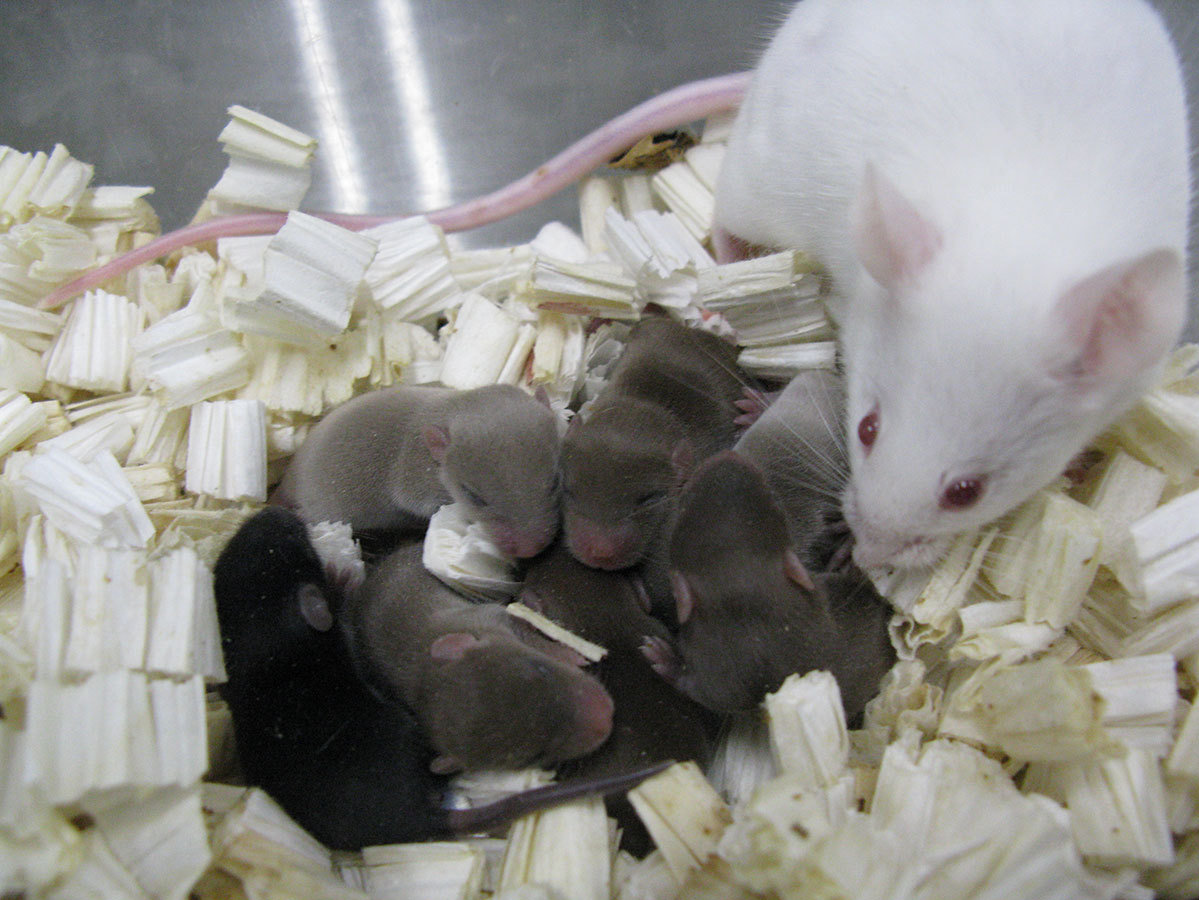
China has achieved a major milestone in space research after a female mouse that travelled to the Chinese Space Station returned to Earth and successfully gave birth to healthy pups. The Chinese Academy of Sciences (CAS) officially confirmed the development on Saturday, calling it a significant breakthrough in mammalian space research.
First Mammal Reproduction Experiment in Chinese Space
The experiment involved four mice—two males and two females—which China launched aboard the Shenzhou-21 spacecraft on October 31. Scientists housed the mice in a specially designed facility aboard the space station. The mission concluded on November 14, when the spacecraft safely returned the animals to Earth.
After returning, one of the female mice became pregnant and delivered nine pups on December 10. Researchers reported that six pups survived and remain healthy. The mother mouse is actively nursing them, and the pups show normal movement and growth patterns.
Space Travel Does Not Affect Reproduction: Researchers
According to CAS researchers, the experiment confirmed that short-term space travel does not negatively affect mammalian reproductive ability. Wang Hongmei, a researcher at CAS, stated that the findings provide valuable data on how space environments influence early mammalian development.
She added that the experiment offers crucial insights into biological behaviour in microgravity conditions. Scientists aim to understand how space travel impacts life processes, especially reproduction and growth.
Why Mice Were Chosen
China selected mice for the experiment due to their genetic similarity to humans, small size, and rapid reproductive cycle. Inside the space station, scientists recreated Earth-like conditions. They maintained controlled lighting cycles to simulate day and night, provided specialized food, and installed waste management systems.
The project also focused on studying how microgravity affects behaviour and physiology. Researchers monitored the mice closely throughout the mission.
Part of Broader Space Biology Research
This marks the first time China has conducted a mammalian reproduction experiment in space. Previously, China carried out experiments on zebrafish and fruit flies to study biological responses to space conditions.
Scientists believe the success of this experiment will support future long-duration space missions and deepen understanding of how life adapts beyond Earth.
For more latest updates, click here.