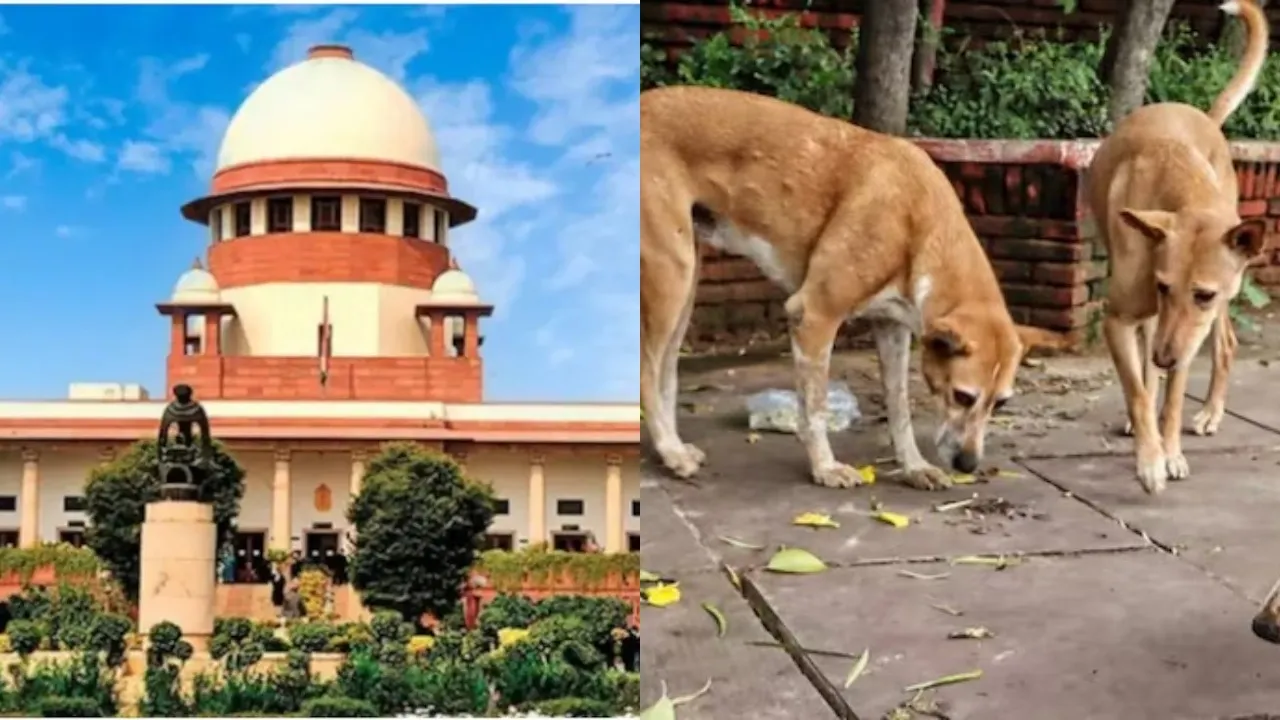
The Supreme Court has once again sparked a nationwide debate with its sharp observations on the growing controversy surrounding stray dogs. During a recent hearing, the apex court expressed strong displeasure over the increasing number of petitions seeking protection for stray dogs, while questioning the broader approach to animal welfare in the country.
Court Questions Selective Concern for Animals
While hearing arguments from senior advocate Kapil Sibal, who appeared in support of stray dog protection, the Supreme Court raised pointed questions. The bench asked why public concern appears limited only to dogs, while other animals such as chickens and goats receive little attention. The judges questioned whether these animals are not living beings and why their lives rarely figure in similar legal debates.
The court also observed that people often realize the danger posed by stray dogs only when they come face to face with them. Emphasizing public safety, it stated that prevention is more important than treatment when dealing with incidents related to dog attacks.
Safety Concerns Near Schools and Public Places
The Supreme Court expressed serious concern over the increasing number of dog-related incidents, particularly near schools, hospitals, railway stations, and public roads. It noted that children and vulnerable citizens face the highest risk in such areas. In view of these dangers, the court directed authorities to intensify sterilization drives to control the stray dog population.
The judges underlined that unchecked growth of stray dogs has become a public safety issue and needs immediate administrative action rather than prolonged legal battles.
Advocates Present Differing Views
Responding to the court’s observations, advocate Kapil Sibal argued that many countries have successfully reduced stray dog problems through vaccination, sterilization, and the establishment of shelters. However, he pointed out that Indian authorities have failed to implement these measures effectively. According to him, poor waste management and increasing garbage on streets have worsened the situation by providing easy food sources for stray dogs.
Meanwhile, advocate Colin Gonsalves, representing animal welfare organizations, presented a different perspective. He claimed that the number of dog bite cases is being exaggerated and shown nearly five times higher than official government data. He also alleged inaccuracies in reporting anti-rabies injections. Gonsalves stated that no rabies cases have been reported in 19 states since 2021.
Debate Continues
The Supreme Court’s remarks have reignited the debate between public safety and animal rights. While the court stressed the need to protect human lives, especially children, it also highlighted the importance of adopting effective and humane solutions. As discussions continue, all eyes remain on how authorities will balance safety concerns with animal welfare policies in the days ahead.
The Supreme Court has once again sparked a nationwide debate with its sharp observations on the growing controversy surrounding stray dogs. During a recent hearing, the apex court expressed strong displeasure over the increasing number of petitions seeking protection for stray dogs, while questioning the broader approach to animal welfare in the country.
Court Questions Selective Concern for Animals
While hearing arguments from senior advocate Kapil Sibal, who appeared in support of stray dog protection, the Supreme Court raised pointed questions. The bench asked why public concern appears limited only to dogs, while other animals such as chickens and goats receive little attention. The judges questioned whether these animals are not living beings and why their lives rarely figure in similar legal debates.
The court also observed that people often realize the danger posed by stray dogs only when they come face to face with them. Emphasizing public safety, it stated that prevention is more important than treatment when dealing with incidents related to dog attacks.
Safety Concerns Near Schools and Public Places
The Supreme Court expressed serious concern over the increasing number of dog-related incidents, particularly near schools, hospitals, railway stations, and public roads. It noted that children and vulnerable citizens face the highest risk in such areas. In view of these dangers, the court directed authorities to intensify sterilization drives to control the stray dog population.
The judges underlined that unchecked growth of stray dogs has become a public safety issue and needs immediate administrative action rather than prolonged legal battles.
Advocates Present Differing Views
Responding to the court’s observations, advocate Kapil Sibal argued that many countries have successfully reduced stray dog problems through vaccination, sterilization, and the establishment of shelters. However, he pointed out that Indian authorities have failed to implement these measures effectively. According to him, poor waste management and increasing garbage on streets have worsened the situation by providing easy food sources for stray dogs.
Meanwhile, advocate Colin Gonsalves, representing animal welfare organizations, presented a different perspective. He claimed that the number of dog bite cases is being exaggerated and shown nearly five times higher than official government data. He also alleged inaccuracies in reporting anti-rabies injections. Gonsalves stated that no rabies cases have been reported in 19 states since 2021.
Debate Continues
The Supreme Court’s remarks have reignited the debate between public safety and animal rights. While the court stressed the need to protect human lives, especially children, it also highlighted the importance of adopting effective and humane solutions. As discussions continue, all eyes remain on how authorities will balance safety concerns with animal welfare policies in the days ahead.
For more latest updates, click here.