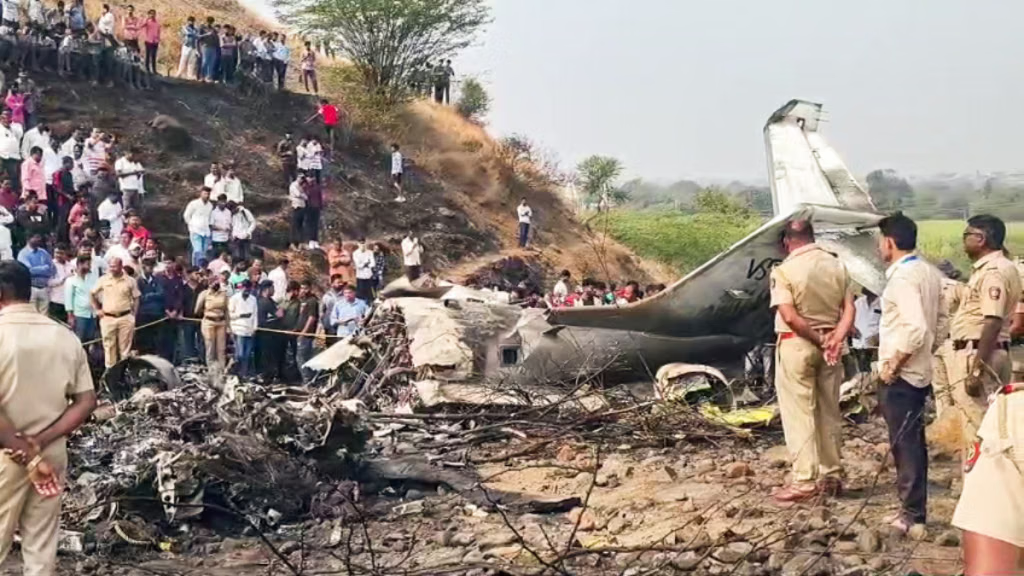
The Aircraft Accident Investigation Bureau (AAIB) has launched a detailed forensic investigation into the Baramati plane crash involving the VSR Travels Jet 45 aircraft. Investigation teams reached the crash site and began collecting physical evidence to determine the exact cause of the accident. At the same time, the Directorate General of Civil Aviation (DGCA) started a parallel inquiry, focusing on technical and operational aspects of the flight.
AAIB and DGCA Teams Inspect Crash Site
AAIB officials carried out on-site inspections and secured key aircraft components for forensic examination. Specialists are studying wreckage patterns, flight instruments, and engine parts to reconstruct the final moments of the aircraft. DGCA teams are also examining whether operational procedures were followed and if any technical fault contributed to the crash.
Authorities confirmed that both agencies are working independently but will share critical findings to speed up the investigation.
Dense Fog Raises Visibility Concerns
During the time of the accident, Baramati airstrip experienced dense fog, which significantly reduced visibility. The pilot informed Air Traffic Control during the first landing attempt that the runway was not visible. During the second attempt, the pilot stated that the runway was in sight. The clock showed 8:45 am at that moment.
Aviation experts find this timeline unusual. Visibility generally improves by that hour due to sunlight. Investigators are now examining why the aircraft failed to land on the runway despite the pilot reporting visual contact.
No Distress Call Deepens Mystery
One of the most concerning aspects of the crash is the absence of a distress signal. The pilot did not issue a mayday call, which typically indicates a life-threatening emergency. After ATC granted permission for a second landing attempt, the pilot did not provide further communication.
The aircraft crashed moments later without any warning. This sudden loss of contact has raised serious questions about what happened inside the cockpit during the final seconds.
Runway Clearance and Highway Impact Angle Under Scrutiny
Air Traffic Control cleared the aircraft to land on Runway 11. Visual evidence from the crash scene, however, suggests that the aircraft went down near a highway rather than on the runway. Highway CCTV footage captured the incident and does not clearly show dense fog in the area at that time.
This has led investigators to explore whether the pilot attempted an emergency landing on the road. Officials, however, maintain that the aircraft was approaching the runway when the crash occurred.
Investigation Focuses on Pilot Decisions and Weather Factors
Experts are now analysing flight data, ATC recordings, and weather conditions to understand the sequence of events. The investigation will focus on pilot judgment, visibility assessment, and possible spatial disorientation.
Authorities stated that only a thorough forensic analysis will reveal whether weather, human error, or technical failure caused the tragedy. The final report is expected to provide clarity and help prevent similar incidents in the future.
For the latest updates, click here.