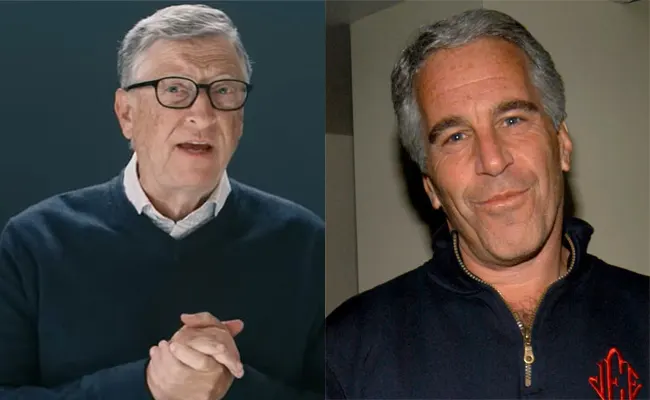
The release of fresh documents linked to the Jeffrey Epstein investigation has sent shockwaves across the world. The U.S. Department of Justice recently made public millions of pages and thousands of videos connected to the case. As a result, new allegations and references involving powerful global figures have once again pushed the scandal into the spotlight.
These revelations have not only reignited debate in the United States but have also influenced political and diplomatic discussions worldwide.
Allegations Mentioning Bill Gates Draw Attention
One of the most talked-about sections of the files involves claims made by Jeffrey Epstein about Microsoft co-founder Bill Gates. In a 2013 email, Epstein alleged that Gates had personal relationships with Russian women and later faced health issues. He also claimed that Gates sought antibiotics through him.
However, Gates’ representatives immediately rejected these claims. They described the statements as false and misleading. They also clarified that Epstein made these allegations after Gates ended all contact with him.
Elon Musk Repeatedly Declined Epstein’s Invitations
The files also shed light on Epstein’s attempts to connect with Tesla CEO Elon Musk. Emails show that Epstein invited Musk several times to visit his private island in the U.S. Virgin Islands.
Despite repeated invitations, Musk never accepted them. The documents clearly indicate that the tech billionaire chose to stay away, which has drawn widespread attention online.
Prince Andrew and Buckingham Palace Reference Raises Questions
Another striking detail involves Prince Andrew. Emails suggest that Epstein received an invitation to a dinner at Buckingham Palace in 2010. While the mention itself has raised eyebrows, the documents do not confirm whether Epstein actually attended the event.
Even so, the reference has once again revived scrutiny around the British royal’s past associations.
U.S. Political and Economic Developments Add to Tension
Meanwhile, the United States continues to face political and financial strain. The federal government has entered yet another shutdown, creating uncertainty. At the same time, former President Donald Trump has filed legal action against the U.S. Treasury and the IRS.
In addition, Trump has nominated Kevin Warsh as the next head of the Federal Reserve. This move has already sparked debate in financial circles.
International Statements Reflect Global Uncertainty
Outside the U.S., Pakistan Prime Minister Shehbaz Sharif openly admitted the country’s discomfort in seeking loans from allied nations. He described the situation as deeply troubling amid Pakistan’s economic crisis.
At the same time, Iran’s Foreign Minister Abbas Araghchi stated that Iran remains ready for both negotiations and conflict. His remarks underline the fragile balance in U.S.–Iran relations.
NASA Delays Artemis-2 Moon Mission
In another major update, NASA announced a delay to its Artemis-2 mission. This mission aims to send humans to the Moon for the first time in more than 50 years. The delay has disappointed space enthusiasts but highlights the challenges of deep-space exploration.
India–U.S. Relations See Cultural Developments
On the diplomatic front, the U.S. State Department disclosed details about gifts exchanged with Indian leaders, including Prime Minister Narendra Modi. Additionally, the U.S. confirmed plans to return three ancient bronze idols that were illegally taken from Indian temples.
This step has been welcomed as a positive gesture in strengthening cultural and diplomatic ties between the two nations.
A Moment That Reshapes Global Conversations
Taken together, the Epstein file disclosures and parallel global events reflect a period of intense political, legal, and diplomatic churn. As more details emerge, these developments continue to influence public opinion, international relations, and trust in powerful institutions.
The coming weeks may reveal even more, keeping the world closely watching.