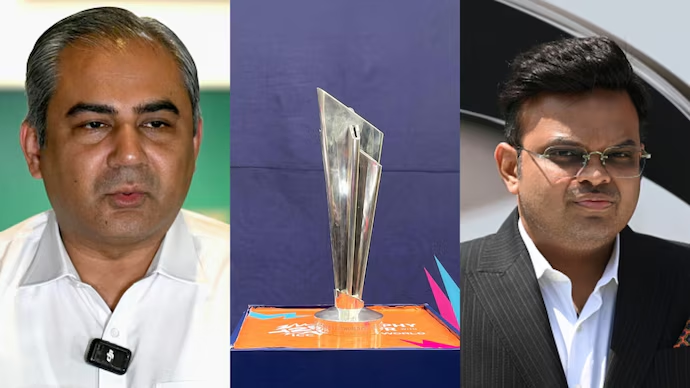
The Pakistan Cricket Board (PCB) has placed three major demands before the International Cricket Council (ICC) in an effort to resolve the growing dispute surrounding its scheduled match against India in the 2026 T20 World Cup. The move signals a clear shift in Pakistan’s stance after earlier threats to boycott the high-profile fixture.
Initially, the PCB warned that it would refuse to play against India, citing extraordinary circumstances. However, after the ICC sought a formal explanation and raised concerns over potential consequences, Pakistan decided to engage in discussions and submit specific proposals instead.
PCB’s Three Conditions Explained
The PCB has asked the ICC to meet three conditions as part of any resolution. First, Pakistan wants the ICC to increase compensation for Bangladesh, which withdrew from the tournament citing security concerns. The PCB believes Bangladesh suffered financial losses due to circumstances beyond its control.
Second, the PCB has demanded that Bangladesh receive a full participation fee, even though the team did not play in the tournament. Pakistani officials argue that Bangladesh fulfilled its commitments until security issues forced its withdrawal.
Third, and most importantly, the PCB has sought hosting rights for a future ICC event. The board views this demand as a long-term safeguard to balance financial and sporting interests.
Background of the Controversy
The controversy began when Bangladesh refused to travel to India for the tournament. Following this decision, the ICC removed Bangladesh from the competition and included Scotland as a replacement. Pakistan openly supported Bangladesh, claiming the withdrawal fell under the “force majeure” clause due to security risks.
When Pakistan later hinted that it might also avoid playing India under similar grounds, the ICC asked the PCB to provide a detailed justification. This request pushed Pakistan into formal negotiations.
Internal Differences Within PCB
While some PCB officials reportedly favour playing India on the scheduled date of the 15th this month in Colombo, PCB Chairman Mohsin Naqvi has maintained a firm position. He continues to resist pressure and insists on securing guarantees before committing to the match.
To take a final call, Naqvi is expected to meet Pakistan Prime Minister Shehbaz Sharif in the coming days. The outcome of that meeting could play a decisive role in shaping Pakistan’s response.
Meanwhile, on the field, Pakistan recently managed a narrow win against the Netherlands, easing some pressure on the team amid off-field uncertainty.
As discussions continue, the ICC now faces the challenge of balancing tournament integrity with political, financial, and security concerns surrounding one of cricket’s most sensitive rivalries.
For the latest updates, click here.