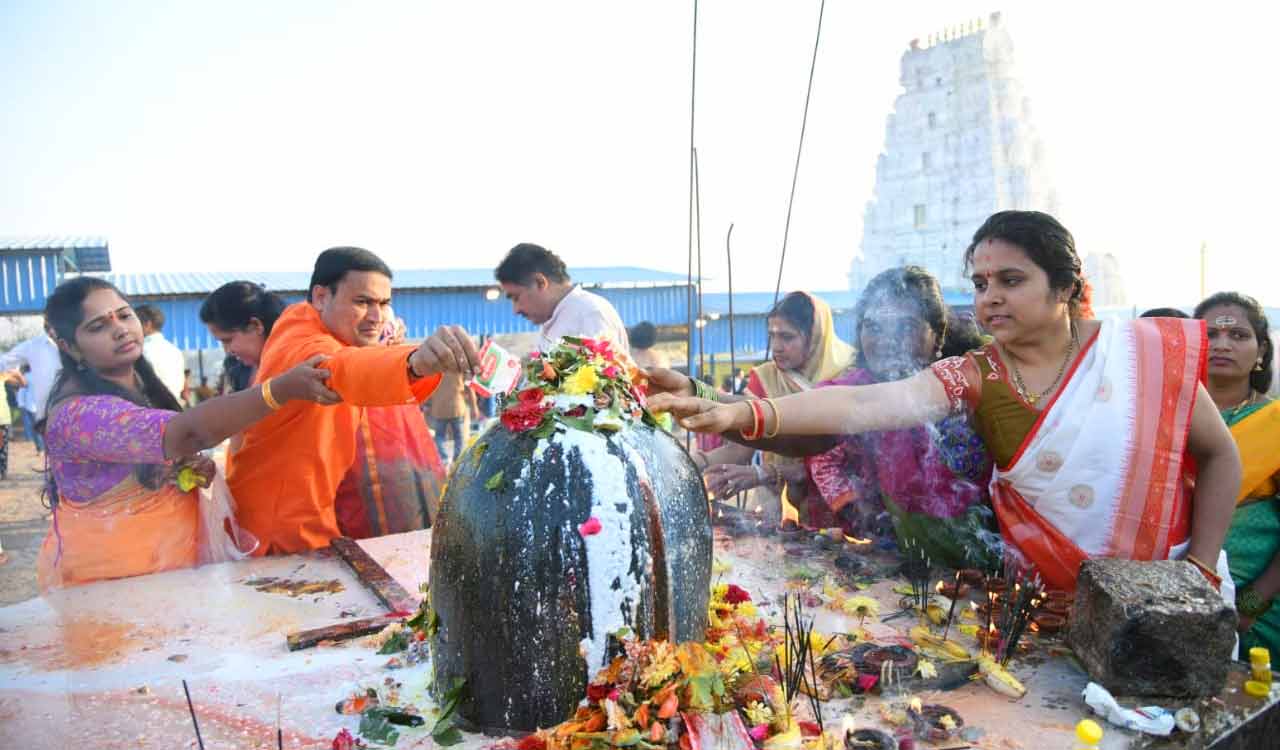
Maha Shivaratri has filled Telangana, Andhra Pradesh, and the rest of India with spiritual splendour. From ancient temple towns to small village shrines, devotees are observing the sacred night of Lord Shiva with deep devotion. Across both Telugu states, temples have made elaborate arrangements for special rituals, abhishekams, and large gatherings of pilgrims.
Grand Festivities in Telangana Temples
In Telangana, major Shiva temples have witnessed a massive influx of devotees since midnight. At Kaleshwara Mukteswara Swamy Temple, pilgrims gathered in large numbers to participate in special abhishekams and night-long prayers. Similarly, Vemulawada Rajarajeshwara Temple and Keesaragutta Temple witnessed heavy crowds throughout the day.
Devotees began arriving at these temples from midnight and stood patiently in long queue lines. Temple authorities ensured smooth darshan by organising crowd control systems, security, and essential facilities. As a result, the celebrations continued in a disciplined and devotional atmosphere.
Midnight Abhishekams in Andhra Pradesh
In Andhra Pradesh, prominent Shiva kshetras also came alive with vibrant festivities. At Srisailam Temple, Mahanandi Temple, and Srikalahasti Temple, special abhishekams began shortly after midnight. Priests performed sacred rituals with Vedic chanting, while devotees offered prayers with great reverence.
From large temples to smaller neighbourhood shrines, authorities arranged extensive facilities for Maha Shivaratri special pujas. Lighting, drinking water, medical aid, and security services were made available to ensure a hassle-free experience for pilgrims.
Traditional Rituals and Sacred Ceremonies
On the auspicious day of Shivaratri, temples followed local traditions and Agama practices. Early morning Suprabhata Seva marked the beginning of the day’s rituals. Priests then conducted Teertha Binde and Mahanyasa Purvaka Rudrabhishekam with devotion and precision.
In certain temples, devotees received a rare opportunity to enter the sanctum and perform abhishekam with their own hands. They offered sacred water and Bilva leaves directly to the Shiva Linga, which made the spiritual experience more personal and profound.
At exactly midnight, many temples conducted the celestial wedding ceremony of Lord Shiva and Goddess Parvati. This divine Kalyanam has remained a cherished tradition for generations.
Lingodbhava Kala and Special Programs
During Lingodbhava Kala, priests performed elaborate abhishekams symbolising the cosmic appearance of Lord Shiva. Furthermore, on the following day, temples scheduled Kalodbhava rituals, Maha Purnahuti, Kalasodwasana, and Kalyana Mahotsavam programs under Trayataka Deeksha in several shrines.
Large temples arranged special facilities to accommodate lakhs of devotees visiting for darshan. Volunteers worked tirelessly to manage queues and maintain order.
Fasting, Annadanam, and Devotional Spirit
Shivaratri is traditionally associated with fasting and a night-long vigil. However, many temples also organised Maha Annadanam programs to serve free meals to devotees. This act of charity reflected the spirit of compassion and community that defines the festival.
Overall, Maha Shivaratri celebrations across Telangana and Andhra Pradesh showcased unwavering devotion, meticulous planning, and vibrant spiritual energy. From midnight abhishekams to grand Kalyana Mahotsavams, the sacred night united millions of devotees in prayer and faith.
For the latest updates, click here.