
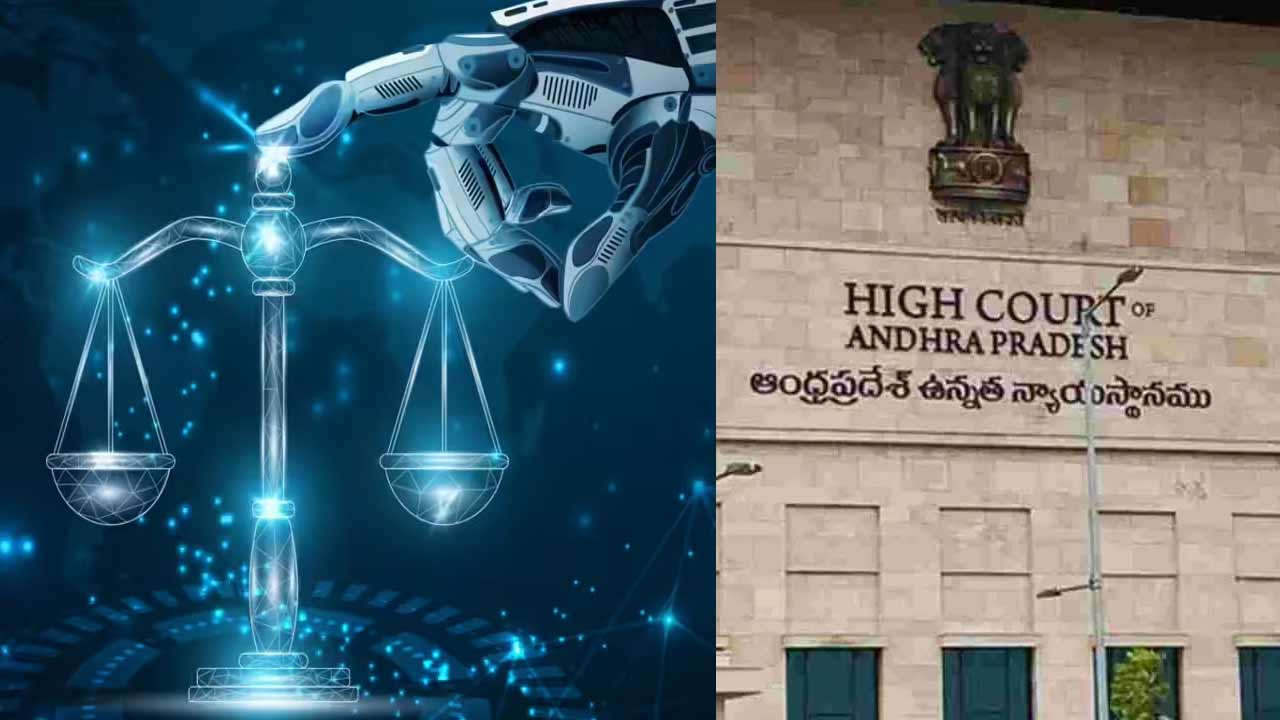
As the world races toward artificial intelligence, technology continues to simplify everyday life. From healthcare to governance, digital tools now influence critical decisions. However, serious concerns emerge when the same technology enters the justice system. A recent incident involving AI-assisted judicial orders has pushed this debate into the national spotlight.
The matter reached the Andhra Pradesh High Court after a judicial officer relied on AI while issuing official orders. During the hearing, the court made sharp observations that resonated far beyond a single case. These remarks served as a broader caution about democracy and the foundations of justice.
High Court Flags Risks of Blind AI Dependence
The High Court clearly stated that AI-generated information, even when it appears accurate, cannot be followed without verification. Judges pointed out that AI tools have shown disturbing flaws. In some situations, they generated legal judgments that never existed. In others, they cited court rulings unrelated to the matter under consideration.
Because of these errors, the court stressed that uncritical dependence on AI could lead to serious miscarriages of justice. Legal decisions demand careful reasoning, contextual understanding, and accountability—areas where machines still fall short.
Public Trust at the Centre of the Debate
More importantly, the court highlighted the potential damage to public confidence. The justice system functions on trust. Citizens believe in courts because decisions come from human judgment, experience, and fairness. If judicial officers rely on automated suggestions without scrutiny, that trust may weaken.
The court indirectly posed a powerful question. If verdicts begin to reflect computer-generated inputs, how long will people continue to trust the judiciary and governance itself? This concern strikes at the heart of democratic institutions.
Judicial Officer Accepts Responsibility
The judicial officer involved in the case acknowledged the mistake during the proceedings. He explained that this was his first experience using AI assistance. He also assured the court that he would exercise greater caution in the future. While the admission showed responsibility, the High Court treated the issue as a warning for the entire system, not an isolated lapse.
Technology Must Support, Not Replace Justice
The court did not reject technology outright. Instead, it called for balance. AI can assist with research and data organisation. However, final decisions must always remain in human hands. Justice depends on interpretation, ethics, and empathy—qualities no algorithm can replicate.
A Wake-Up Call for the Legal System
In conclusion, this episode delivers a clear message. Technology can strengthen institutions when used wisely. Yet, justice must never surrender its authority to machines. If courts allow AI to dominate decision-making, public faith in the rule of law may slowly erode. This case stands as a timely reminder that innovation must move forward with responsibility, restraint, and human oversight.
For the latest updates, click here.