
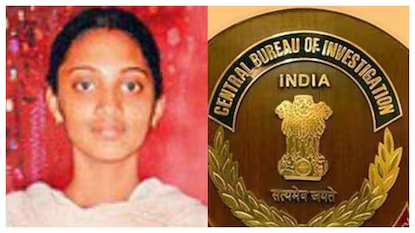
Authorities handed over the mortal remains of Ayesha Meera to her parents today following orders from the CBI Special Court in Vijayawada. The family performed the burial in Tenali in accordance with Islamic traditions.
The court recently accepted the CBI’s final report and directed officials to return the remains to the family while ensuring adequate security arrangements.
Remains Handed Over to Parents
Officials handed over the remains to Shamshad Begum and Syed Iqbal Basha at 10 a.m. The family completed the last rites before 1 p.m.
The burial took place at a local kabristan in Tenali. District officials remained present throughout the process. Authorities recorded the entire ceremony as per court instructions.
Tight Security Arrangements
Police deployed security personnel around the graveyard to prevent any untoward incidents. Earlier, the CBI wrote to the Guntur District Superintendent of Police and the Tenali Tahsildar seeking protection and administrative support.
Officials arranged an ambulance to transport the remains to the burial ground.
Investigation Details
During the investigation, the CBI conducted a re-postmortem and sought expert medical opinion from doctors at Gandhi Hospital. After completing the probe, the agency submitted its final report to the court.
The court reviewed the findings and accepted the report.
Background of the Case
The Ayesha Meera murder case dates back to December 27, 2007. Nineteen-year-old B.Pharmacy student Ayesha Meera was found murdered in a women’s hostel at Ibrahimpatnam in the present NTR district of Andhra Pradesh. She had stayed in the hostel during the Christmas holidays when the incident occurred.
The crime triggered widespread outrage across the state. In 2008, police arrested Satyam Babu and claimed he had confessed. A trial court later convicted him and sentenced him to life imprisonment.
However, the victim’s family and rights groups raised serious concerns about the investigation. In 2017, the Andhra Pradesh High Court acquitted Satyam Babu, stating that the prosecution failed to prove the charges beyond reasonable doubt. By then, he had spent nearly nine years in jail.
Following the High Court’s directions, authorities transferred the probe to the Central Bureau of Investigation. The CBI conducted a fresh investigation, including forensic review and re-postmortem procedures, before filing its final report.
The court accepted the report, and the case was officially closed due to lack of certain and legally sustainable evidence.
For the latest updates, click here.