
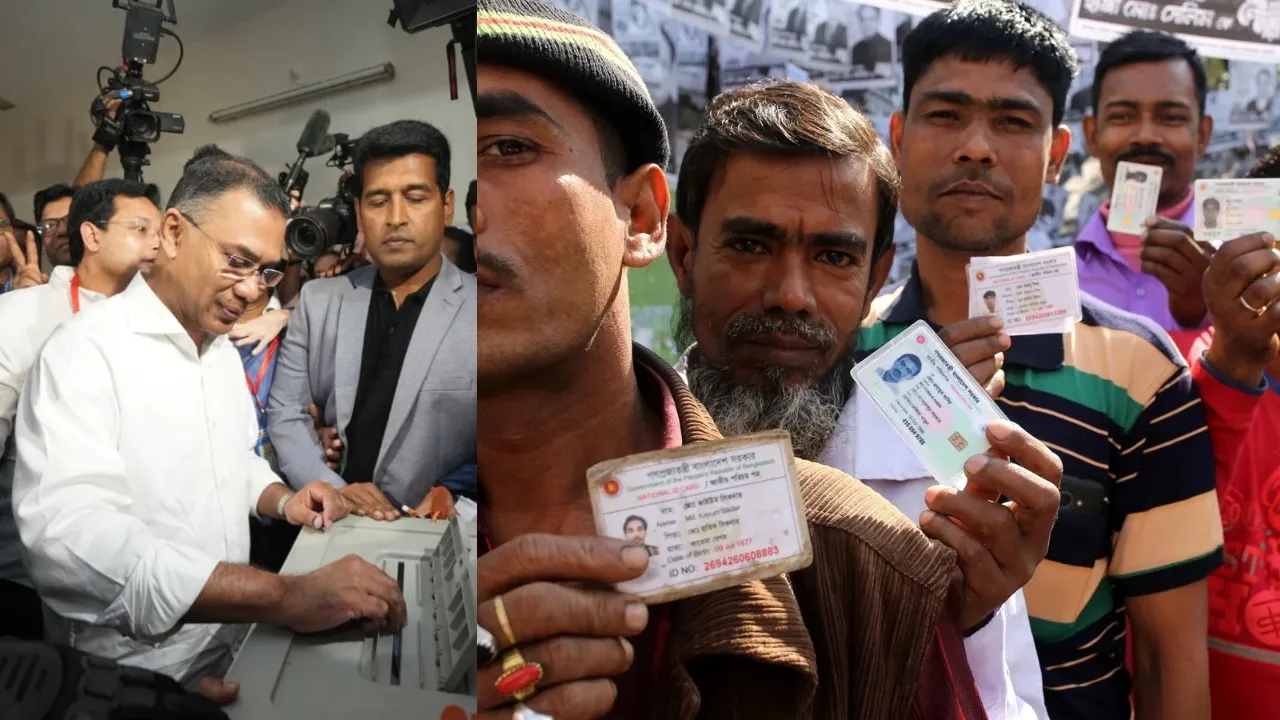
Bangladesh is witnessing a historic political moment as it heads into the general elections on February 12, 2026. After decades of rule by the Awami League under Sheikh Hasina, this election marks the first time the party will not be in the fray. The main contest is now between the Bangladesh Nationalist Party (BNP), led by Tarique Rahman, and the Jamaat-e-Islami alliance.
Tarique Rahman Returns to Lead BNP
Tarique Rahman, who spent 17 years in London, returned to Bangladesh following the death of his mother, Khaleda Zia. He has assumed leadership of the BNP and hopes that public sympathy for his mother will boost his political momentum. Rahman and his daughter, Zaima Rahman, have already exercised their right to vote.
BNP’s Election Manifesto
Under the slogan “Bangladesh First for Everyone,” Tarique Rahman has outlined key promises for his party’s manifesto:
Limiting any individual to serve as Prime Minister a maximum of 10 times.
Establishing an upper house with 100 members and introducing the position of Deputy Prime Minister.
Conducting an independent investigation into the July 2024 violence and addressing students’ demands.
Strengthening relations with neighbouring countries, especially India, and other Muslim-majority nations.
Challenges Ahead
Tarique Rahman faces tough competition from the Jamaat-e-Islami alliance and the newly formed Nationalist Cooperation Party (NCP). While young voters may lean toward NCP, Islamic supporters are likely to back Jamaat. Bringing the BNP back to power after 2006 remains a significant challenge, making this election a pivotal moment in Bangladesh’s political history. As Bangladesh prepares for this crucial election, the eyes of the nation and the international community remain fixed on Tarique Rahman’s campaign and whether the BNP can stage a political comeback.
For the latest updates, click here.