
South Korean Automakers Post All-Time High Market Share
Despite rising tariff pressure under former US President Donald Trump’s trade policies, South Korean automakers Hyundai and Kia have delivered a strong performance in the American automobile market. In 2025, the two companies together captured an all-time high market share of 11.3 percent, setting a new benchmark in the United States.
According to industry data, Hyundai and Kia together sold 1.84 million vehicles in the US last year. This milestone highlights their growing acceptance among American consumers, even as global trade conditions remained challenging.
Hyundai and Kia Secure Fourth Position in US Auto Market
Market research firm Wards Intelligence reported that Hyundai sold 984,017 units, securing a 6.1 percent market share. Meanwhile, Kia sold 852,155 units, accounting for 5.2 percent of the market. With this combined performance, the Hyundai Motor Group ranked fourth in the US market.
The group followed major automakers such as General Motors, Toyota, and Ford. General Motors led with a 17.5 percent share, followed by Toyota at 15.5 percent and Ford at 13.1 percent.
Sales Growth Outpaces Overall Market
Notably, the overall US auto market grew by 2.4 percent during the period. However, Hyundai and Kia outperformed the market by recording a 7.5 percent increase in sales. Analysts say this gap reflects strong brand trust and effective pricing strategies.
Moreover, the companies chose not to pass the tariff burden on to customers. Instead, they absorbed the additional costs themselves, which helped maintain competitive pricing and boosted demand.
Hybrid Vehicles Drive Strong Performance
Another key factor behind the success was the rapid growth in hybrid vehicle sales. Hyundai and Kia focused heavily on hybrid models to meet rising demand for fuel-efficient vehicles. As a result, hybrid sales surged by 48.8 percent, reaching 331,023 units last year.
Industry experts believe this shift toward eco-friendly vehicles played a major role in attracting new buyers across the US.
Local Production Strengthens Market Position
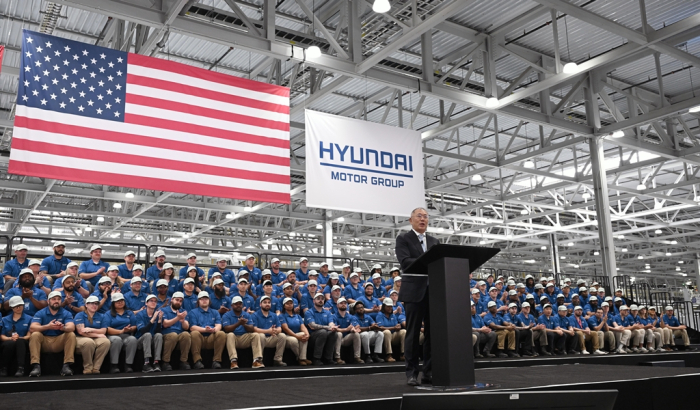
In addition, increased local production supported long-term growth. According to Yonhap News Agency, Hyundai completed its third manufacturing plant in Georgia, significantly expanding production capacity in the US.
Because of this strategy, vehicle exports from South Korea to the US declined by 4.2 percent. However, local manufacturing helped reduce tariff impact and improved supply efficiency.
Strategic Choices Pay Off
Overall, Hyundai and Kia have proven that smart pricing, local production, and a strong hybrid lineup can overcome trade barriers. Their record-breaking performance signals a shift in the US auto market and strengthens South Korea’s position as a global automotive leader.