
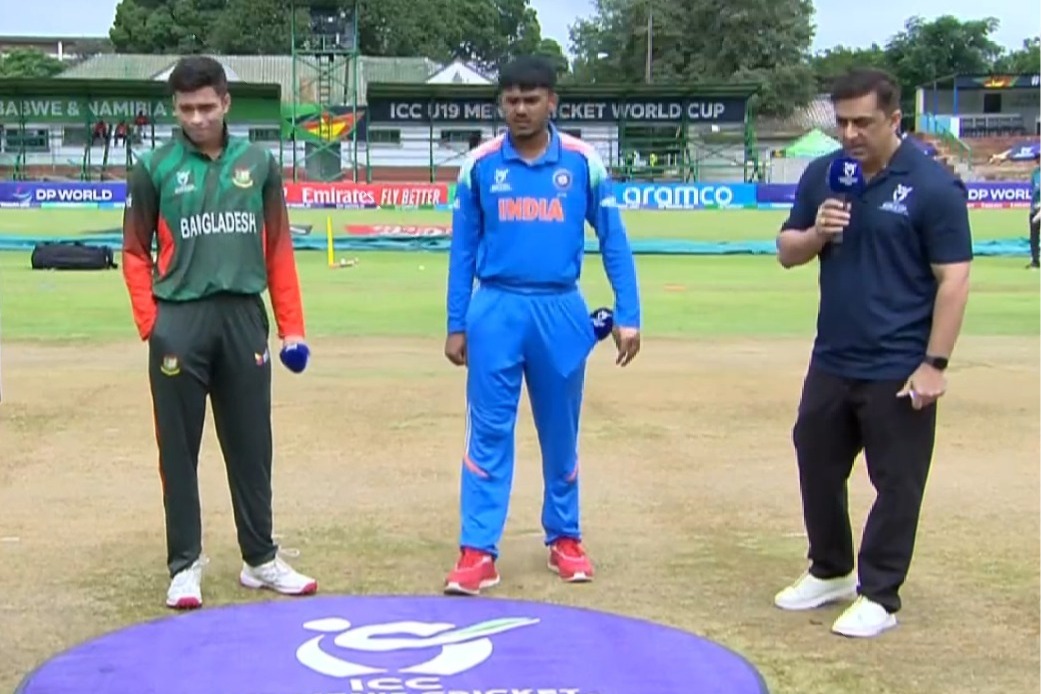
The impact of strained relations between India and Bangladesh was clearly visible on the cricket field during the ICC Under-19 World Cup match held in Bulawayo on Saturday. In an unusual and widely discussed incident, the captains of both teams skipped the customary handshake during the toss, breaking a long-standing cricket tradition.
The match, which started 15 minutes late due to rain, saw India U-19 captain Ayush Mhatre and Bangladesh vice-captain Jawad Abrar walk out for the toss. Bangladesh won the toss and chose to bowl first. However, instead of greeting each other with a handshake, both captains completed the toss formalities, gave their interviews, and returned to the pavilion without any interaction. The moment did not go unnoticed and quickly became a talking point among fans and experts.
‘No Handshake’ Policy Continues
India has followed a strict “no handshake” policy in recent months, especially in matches involving countries with strained diplomatic ties. This approach first gained attention during the 2025 Asia Cup, where Indian players avoided handshakes with Pakistan in all three matches. The same stance continued in the Women’s World Cup and the Under-19 Asia Cup.
Now, Bangladesh has been added to that list. Analysts believe the decision reflects broader political and diplomatic tensions rather than any on-field dispute. By extending this policy, India has sent a clear message that off-field relations are influencing on-field conduct as well.
Rising Tensions Between the Two Nations
Relations between India and Bangladesh have faced challenges recently due to several sensitive incidents. Reports of the death of a student leader in Bangladesh and the killing of a Hindu man sparked concern and criticism in India. These developments added strain to bilateral ties.
The situation worsened when the BCCI reportedly advised IPL franchise Kolkata Knight Riders to release Bangladesh fast bowler Mustafizur Rahman, leading to further controversy. In response, the Bangladesh Cricket Board requested the ICC to move their T20 World Cup matches to Sri Lanka, citing security concerns.
As a result, political tension has now spilled into the sporting arena. While cricket often acts as a bridge between nations, this incident shows how diplomacy can influence even the smallest traditions of the game.
Despite the controversy, officials from both sides have remained silent. However, the skipped handshake has already become one of the most talked-about moments of the Under-19 World Cup, highlighting how closely sports and international relations remain connected.
For more latest updates, click here.