
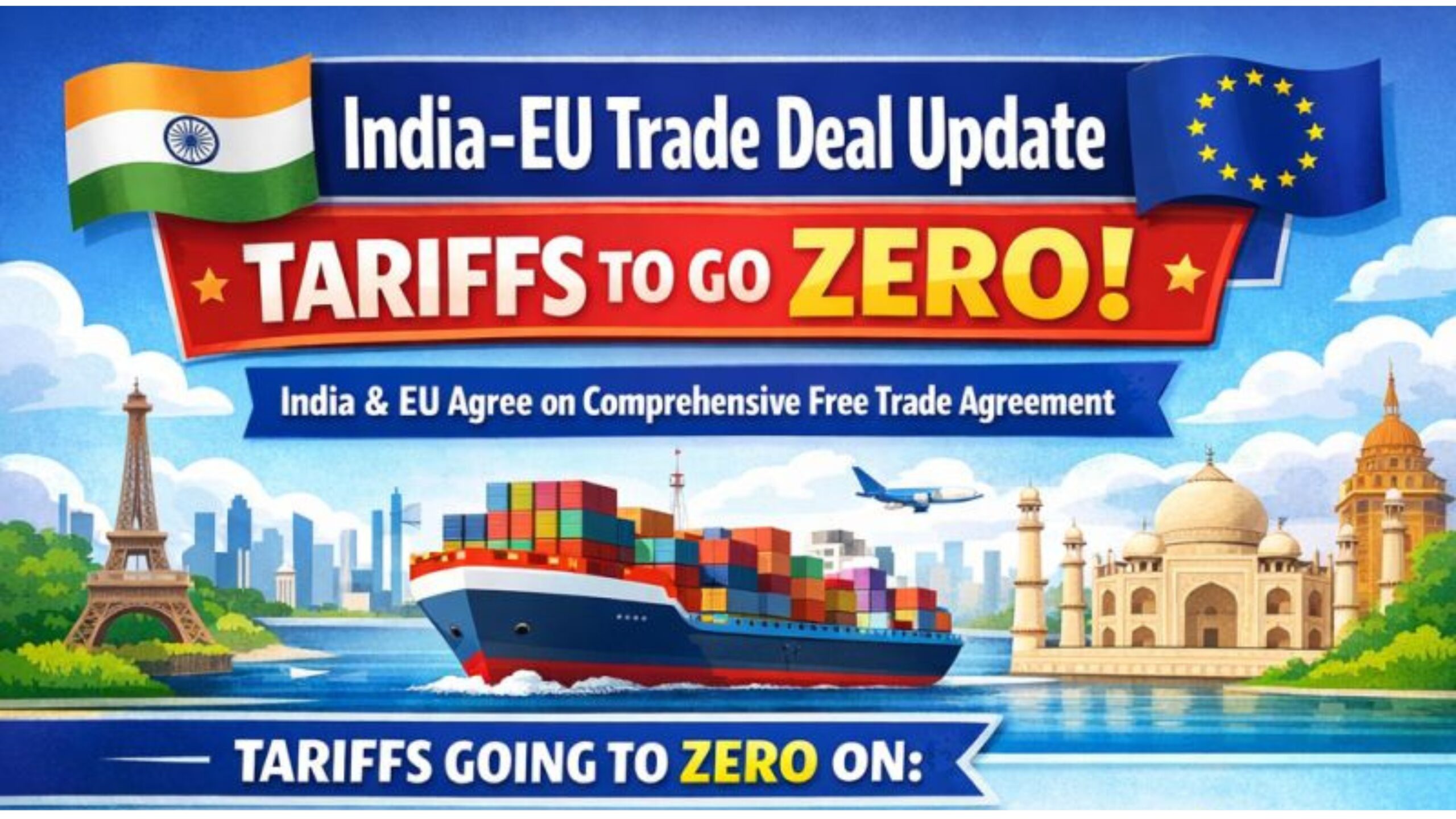
India and the European Union have finalised a long-awaited free trade agreement, ending over two decades of negotiations. The deal marks a major shift in economic ties and signals a new phase of cooperation built on shared growth and mutual reliance. Both sides now aim to strengthen trade links in a fast-changing global economy.
Wider Market Access Through Tariff Cuts
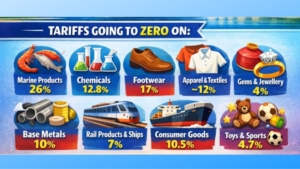
Under the agreement, most tariffs will drop to zero or near-zero levels. As a result, the deal creates one of the largest market-access frameworks ever signed by India. Indian industries will gain smoother entry into European markets, especially in sectors that value quality and safety.
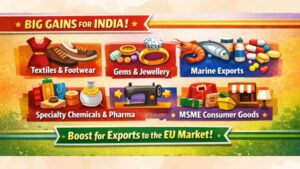
Moreover, pharmaceuticals and textiles stand to benefit the most. These sectors can now reach Europe’s high-value consumers with fewer cost barriers. This change is expected to boost exports and encourage fresh investments.
New Direction in Trade Thinking
The agreement reflects a clear change in trade philosophy. Instead of focusing on protection, both sides now emphasise competitiveness and resilience. This shift allows businesses to grow stronger through open markets rather than isolation.
At the same time, meeting European standards is no longer seen as a hurdle. Instead, it opens doors to global markets. Once Indian products meet EU norms, they gain wider acceptance across developed economies.
India Pushes for Strategic Diversification
Global trade patterns have changed rapidly in recent years. Competition from countries such as China and Vietnam has forced India to rethink its export strategy. Therefore, the EU agreement plays a key role in reducing dependence on any single market.
In addition, the deal helps India spread its trade risk and secure long-term stability. Stronger ties with Europe also support India’s goal of becoming a global manufacturing and export hub.
Regulatory Challenges Still Remain
Despite the benefits, the agreement also brings challenges. European markets demand strict compliance in quality, safety, and certification. Indian exporters must meet these standards to fully benefit from tariff cuts.
Therefore, success will depend on faster upgrades in certification systems, testing labs, and logistics networks. If India strengthens these areas, the agreement could deliver lasting gains for exporters and the wider economy.
Overall, the India–EU free trade agreement stands as a landmark step that blends opportunity with responsibility, shaping the future of India’s global trade journey.
For the latest updates, click here.