
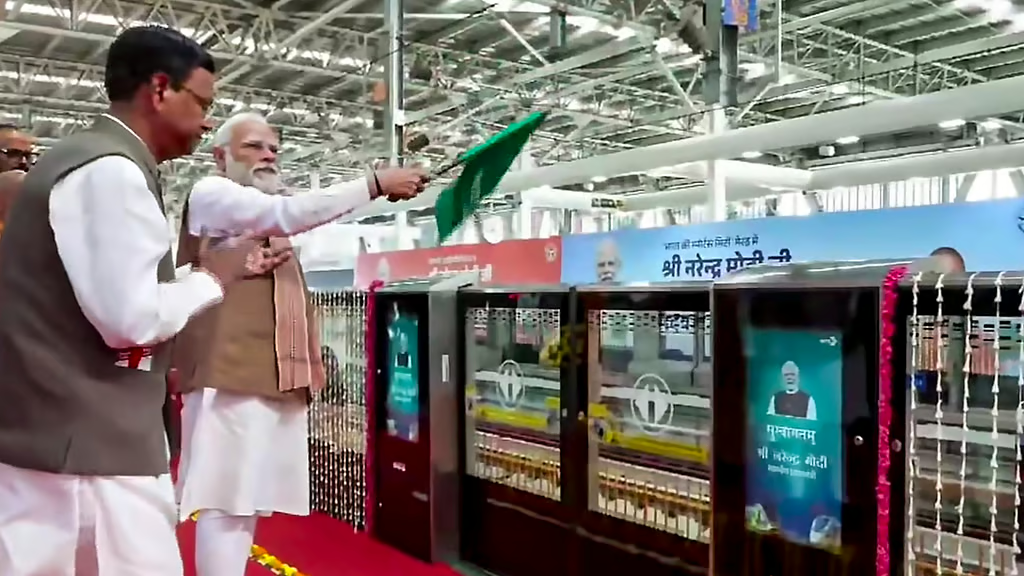
Prime Minister Narendra Modi inaugurated India’s fastest metro service along with the Namo Bharat Regional Rapid Transit System (RRTS) in Meerut, Uttar Pradesh. These projects aim to transform urban and regional transport while promoting sustainable development in the region.
High-Speed Metro Service
The new metro runs on a 21 km corridor between Meerut South and Modipuram, stopping at 12 stations. Trains reach a top speed of 120 kmph, making it the fastest metro service in India. Each train has three air-conditioned coaches made of lightweight stainless steel, painted green, blue, and orange. The system can carry 700 passengers at a time, with 173 seats, including dedicated sections for women, the elderly, and disabled passengers.
Modern features include CCTV cameras, USB ports, an automated train system, and regenerative braking technology, ensuring safety and energy efficiency. These innovations provide commuters with a faster, safer, and more comfortable travel experience.
Namo Bharat Regional Rapid Transit System
The Namo Bharat RRTS connects Delhi to Meerut through an 82 km corridor passing Sahibabad, Ghaziabad, and Modi Nagar. It operates at speeds up to 180 kmph, reducing travel time between Delhi and Meerut by about an hour. This service enhances regional connectivity while easing traffic on roads.
The project forms part of a larger regional development plan valued at approximately ₹12,930 crore. It demonstrates a strategic push toward modern, efficient, and eco-friendly transportation.
Strategic Vision
Prime Minister Modi highlighted that these initiatives are a “new revolution” for a “Viksit Bharat” (Developed India). By reducing road congestion and lowering vehicle carbon emissions, the metro and RRTS support sustainable urban growth. These projects also lay the foundation for faster, greener, and more integrated regional transit systems across India.
For the latest updates, click here.