
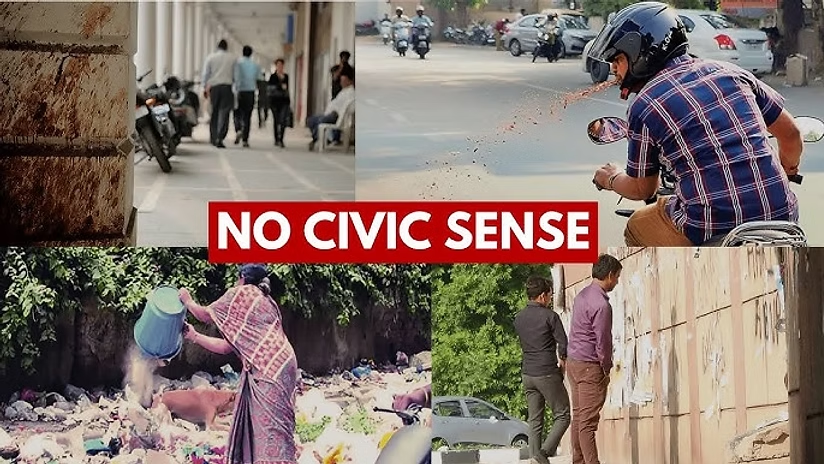
India has made rapid strides in modern infrastructure over the past decade. High-speed trains, expanded metro networks, and modern airports now define the country’s urban landscape. However, the condition of many public spaces tells a different story and exposes a growing gap between infrastructure growth and civic behaviour.
While the country continues to build advanced facilities, maintaining cleanliness and order in public areas remains a major challenge.
Modern Facilities, Outdated Public Habits
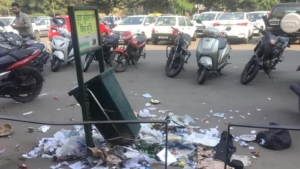
Across cities, citizens often maintain their homes with care but treat public spaces with neglect. Littered platforms, damaged public property, and ignored civic rules reflect a mindset that sees public areas as ownerless.
This contrast highlights a deeper issue. Infrastructure represents the “hardware” of progress, but civic behaviour forms the “software.” In many places, the software has failed to evolve at the same pace.
Roots of Civic Indifference
Experts link this behaviour to historical and cultural factors. The colonial era created distance between citizens and public institutions. Many people still view public assets as tools for use, not shared responsibilities.
Over time, a service-oriented governance model reinforced this thinking. Citizens began to expect authorities to clean, repair, and manage everything, while personal accountability faded.
‘Chalta Hai’ Culture and Everyday Violations
The widely accepted “chalta hai” attitude further weakens civic discipline. Minor violations often go unchecked and slowly become normalised. Littering, queue jumping, and damage to public property rarely draw social disapproval.
This tolerance reduces pressure to behave responsibly. As a result, disorder becomes routine rather than exceptional.
Governance Focused on Visibility
Governments continue to prioritise visible infrastructure projects because they offer quick political returns. Roads, airports, and rail corridors attract attention and votes. Civic education and behavioural change programs receive less focus.
Such initiatives take time, demand consistency, and show results gradually. Measuring their success also proves difficult, which often discourages investment.
Urban Growth Adds Pressure
Rapid urbanisation has added to the problem. Millions migrate to cities each year in search of work. Many newcomers lack exposure to urban civic norms.
The education system also offers limited guidance on practical citizenship. Schools focus on theory rather than everyday civic responsibility, leaving gaps in awareness.
Cost of Neglecting Civic Sense
Poor civic behaviour increases maintenance costs and shortens the life of public assets. Authorities spend heavily on repairs that proper use could prevent.
Over time, this cycle breeds public cynicism. Citizens question the value of modern facilities when they deteriorate quickly.
Linking Infrastructure With Civic Conditioning
Policy experts now argue for an integrated approach. They suggest dedicating a portion of infrastructure budgets to civic education and behaviour-focused campaigns.
Such efforts could promote ownership of public spaces and reinforce social accountability. Enforcement must also remain consistent to set clear expectations.
Shifting the Civic Narrative
Observers stress the need for a narrative shift. Civic responsibility should reflect respect for fellow citizens, not fear of authority.
By fostering pride in shared spaces, India can align public behaviour with its infrastructure ambitions and move from passive usage to active stewardship.
For the latest updates, click here.