
Three decades ago, playing for Team India was a matter of pride, not profit. Cricketers represented the nation with passion, even though the financial rewards were modest. Many players worked regular 9-to-5 jobs while continuing their cricket careers. Parents often encouraged children to pursue stable professions like engineering or medicine rather than cricket.
However, Indian cricket has witnessed a remarkable transformation.
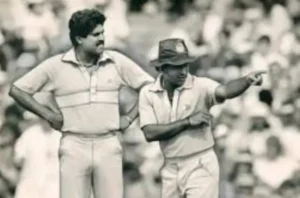
Fans still cherish the iconic image of Kapil Dev lifting the 1983 World Cup at Lord’s. Yet, few realise that players of that era earned just ₹1,500 per match, along with a daily allowance of ₹200. At the time, the BCCI had limited funds. To support their families, players worked in banks, railways, and public sector units under sports quotas. Sunil Gavaskar once recalled that poor performances could push players back to their office desks.
During the 1990s, Doordarshan was the sole broadcaster of Indian matches. Interestingly, the BCCI paid to air those games. The scenario changed dramatically after Jagmohan Dalmiya became BCCI president. In 1993, India’s broadcast rights were sold for $550,000. By 2000, broadcasting revenues crossed $1 billion, marking a turning point for Indian cricket.
A major reform came in 2004 with the introduction of the central contract system. Initially, contracts ranged between ₹20 lakh and ₹50 lakh. Today, players earn a minimum of ₹1 crore annually, while Grade A+ cricketers receive up to ₹7 crore. Match fees have also increased significantly, with ₹15 lakh per Test, ₹6 lakh per ODI, and ₹3 lakh per T20.
Domestic cricketers now earn between ₹17 lakh and ₹25 lakh annually. Moreover, the IPL’s launch in 2008 revolutionised earnings. In recent years, women cricketers have also achieved pay parity, reflecting progressive reforms.
Today, cricket is not just a passion—it is a viable career. Parents now dream of seeing their children wear the blue jersey, symbolising how far Indian cricket has truly come.
For more latest updates, click here.