
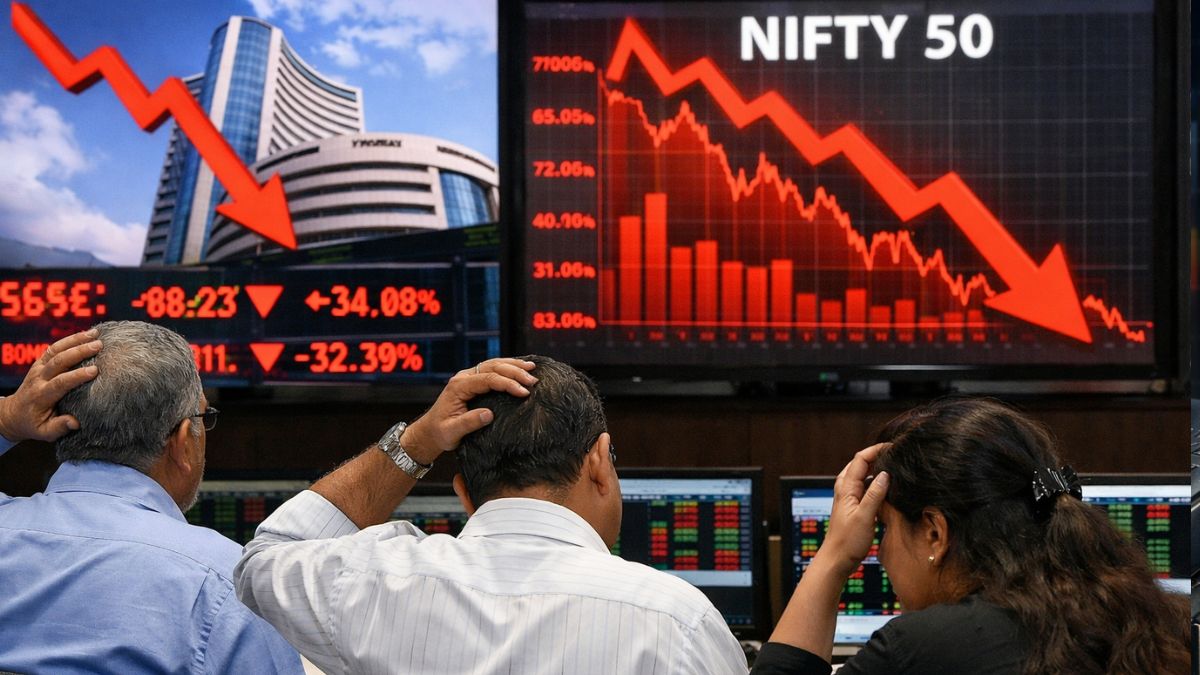
Indian stock markets witnessed a massive sell-off as escalating tensions between Iran and Israel rattled investor confidence. The BSE Sensex crashed over 1,700 points, while the Nifty 50 plunged more than 500 points in a single trading session. The sharp fall reflects growing fears that prolonged conflict in West Asia could disrupt global trade and energy supplies.
Heavy selling dominated early trade and continued throughout the session. Investors rushed to book profits and reduce exposure to riskier assets. As a result, key sectors such as banking, IT, and auto stocks faced intense pressure. Market analysts said uncertainty in global markets triggered panic among domestic investors.
Rupee Weakens Sharply
Alongside equity markets, the Indian rupee also came under pressure. The currency lost 67 paise in a single day against the US dollar. Traders attributed the fall to rising crude oil prices and increased demand for safe-haven assets.
Currency dealers noted that geopolitical tensions often push investors toward the dollar. Therefore, emerging market currencies like the rupee tend to weaken during such periods.
West Asia Tensions Shake Sentiment
The ongoing Iran–Israel conflict has created instability across global markets. Since India depends heavily on crude oil imports, any disruption in supply can increase inflationary pressure. Consequently, investors fear higher import bills and potential economic strain.
Market experts believe volatility may continue until clarity emerges on the geopolitical front. However, they advise long-term investors to avoid panic-driven decisions and focus on fundamentals.
Despite the sharp correction, analysts say Indian markets remain structurally strong. Yet, global cues will likely drive short-term movements in the coming sessions. Investors now await further developments in West Asia and policy responses from global financial institutions.