West Asia is on high alert after a series of strikes targeted Iran’s top leadership. Reports confirm that Supreme Leader Ali Khamenei, Iran’s Defence Minister Amir Nasirzadeh, and Revolutionary Guards Commander Mohammad Pakpour were killed in joint U.S.-Israel operations. The attacks have struck Iran hard, raising concerns over further military escalation in the region.
While U.S. President Donald Trump declared support for establishing a democratic government in Iran, Israeli defence forces warned that operations against Iran would continue. Khamenei’s death has intensified the conflict, sparking widespread debates on the military balance between the United States, Israel, and Iran.
Iran’s Military Strength
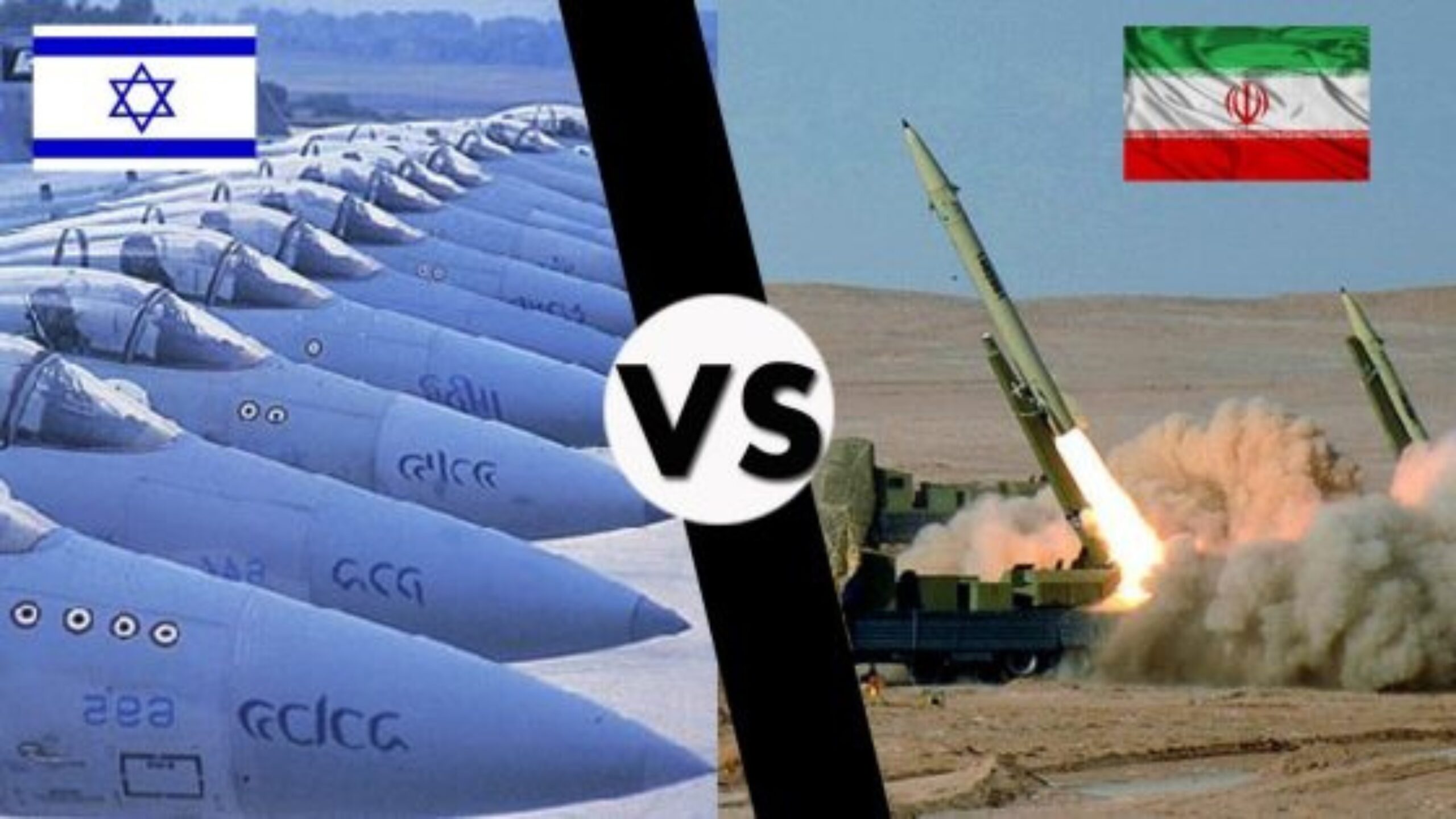
Numerically, Iran maintains a large armed force. The country focuses on domestic weapons production and missile development to overcome sanctions. Iran’s active military includes around 610,000 personnel, supplemented by thousands in reserve and paramilitary forces. Its land forces possess nearly 2,000 tanks, thousands of artillery units, and 1,500 mobile rocket launchers. Ballistic missile capabilities include:
Hajj Qasim and Khaibar Shekan missiles: 1,300 km range
Ghadir-H variants: 1,350–1,950 km range
Sejjil missiles: 2,000 km range
Additionally, the 200,000-strong Islamic Revolutionary Guard Corps adds significant strength.
Iran’s air force operates 551 aircraft, mostly older models. To compensate, Iran relies on missiles, drones, and multi-layered air defence systems. Its navy includes submarines, fast-attack crafts, and missile-equipped patrol vessels, capable of operations in narrow sea routes. Iran also has nearly 6,000 naval personnel, giving it the ability to temporarily block the strategic Strait of Hormuz.
Israel’s Modern Military Capabilities
Compared to Iran’s forces, Israel’s forces are smaller in number but technologically advanced. The country fields around 170,000 active soldiers and 465,000 reservists. Israel boasts:
Advanced tanks and artillery with high-speed targeting systems
600 combat aircraft, including F-16s and F-35s
Highly precise surveillance aircraft and networked warfare capabilities
Around 100 naval vessels, including submarines, corvettes, and fast-attack ships
Robust missile defence systems: Iron Dome, David’s Sling, Yaar, and THAAD
Israel also possesses Jericho-2 and Jericho-3 missiles, multiple long-range strike capabilities, and over 90 nuclear warheads.
U.S. Military Presence in West Asia
The United States maintains significant military power in the region, supporting Israel and its interests. Globally, it operates 128 bases across 51 countries, with about 40,000 troops stationed in West Asia. Recently, U.S. aircraft carriers USS Gerald R. Ford and USS Abraham Lincoln have been deployed with strike groups, including guided missile destroyers and F-18 fighter jets.
Permanent bases include:
Bahrain (Juffair): 5th Fleet HQ with ~9,000 personnel
Kuwait: Camp Arifjan and other bases supporting operations in Iraq and Syria
UAE (Al Dhafra): Home to the 380th Air Expeditionary Wing with drones and fighter squadrons
Iraq (Ayn Al Asad, Erbil): Training and operations hubs with ~2,500 U.S. personnel
Saudi Arabia (Prince Sultan Air Base): Patriot and THAAD missile defences
The U.S. also maintains smaller forces in Jordan, Egypt, Syria, Yemen, and Israel, positioning itself strongly in the ongoing conflict.
Regional Outlook
The West Asia situation remains highly volatile. Iran is reportedly planning retaliatory attacks after the loss of Khamenei, Nasirzadeh, and Pakpour. The coming weeks will reveal whether Iran can assert military dominance or if U.S.-Israel forces will maintain the upper hand. Analysts warn that the conflict could further destabilise global energy markets and security in the Gulf.
For the latest updates, click here.