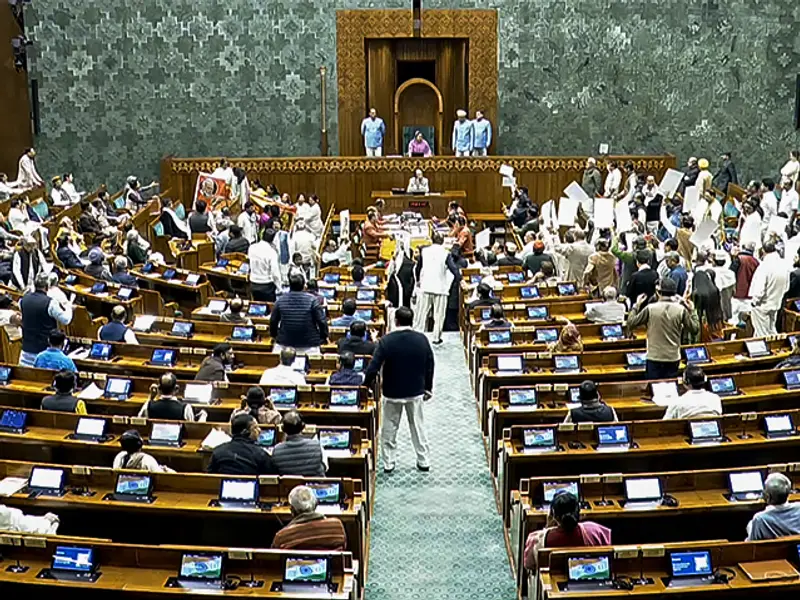
An unexpected development unfolded in the Lok Sabha, drawing sharp attention from both political circles and the public. The House approved the motion of thanks to the President’s Address, but did so without a speech from Prime Minister Narendra Modi, breaking long-standing parliamentary convention.
This rare move followed intense disruptions and protests by opposition members, which altered the usual sequence of events in the House.
What Normally Happens in Parliament
Traditionally, the debate on the President’s Address concludes with the Prime Minister’s reply. After members from different parties share their views, the Prime Minister responds to key points raised during the discussion. Only then does the House adopt the motion of thanks.
However, this time, the process took a different turn due to sustained opposition protests that prevented the Prime Minister from addressing the House.
Protests Force Adjournment
On the previous day, repeated protests by opposition leaders disrupted proceedings. As a result, the Lok Sabha adjourned without Prime Minister Modi delivering his concluding speech on the President’s Address. This adjournment set the stage for an unusual parliamentary decision.
When the House reconvened, expectations remained high for the Prime Minister’s response. Instead, events moved swiftly in a different direction.
Speaker Announces Adoption of Motion
Soon after proceedings began, the Speaker announced that the motion of thanks had been adopted. The announcement surprised many members, as the House cleared the motion without the Prime Minister’s reply, a step rarely seen in parliamentary practice.
Despite objections and murmurs from opposition benches, the Speaker’s declaration finalised the adoption.
Political Reactions and Significance
The development has triggered a fresh political debate. While the ruling side views the decision as procedurally valid, opposition parties argue that skipping the Prime Minister’s reply undermines parliamentary dialogue.
Regardless of differing opinions, the episode stands out as a notable moment in Lok Sabha proceedings, highlighting how disruptions and political tensions can reshape established norms inside Parliament.