
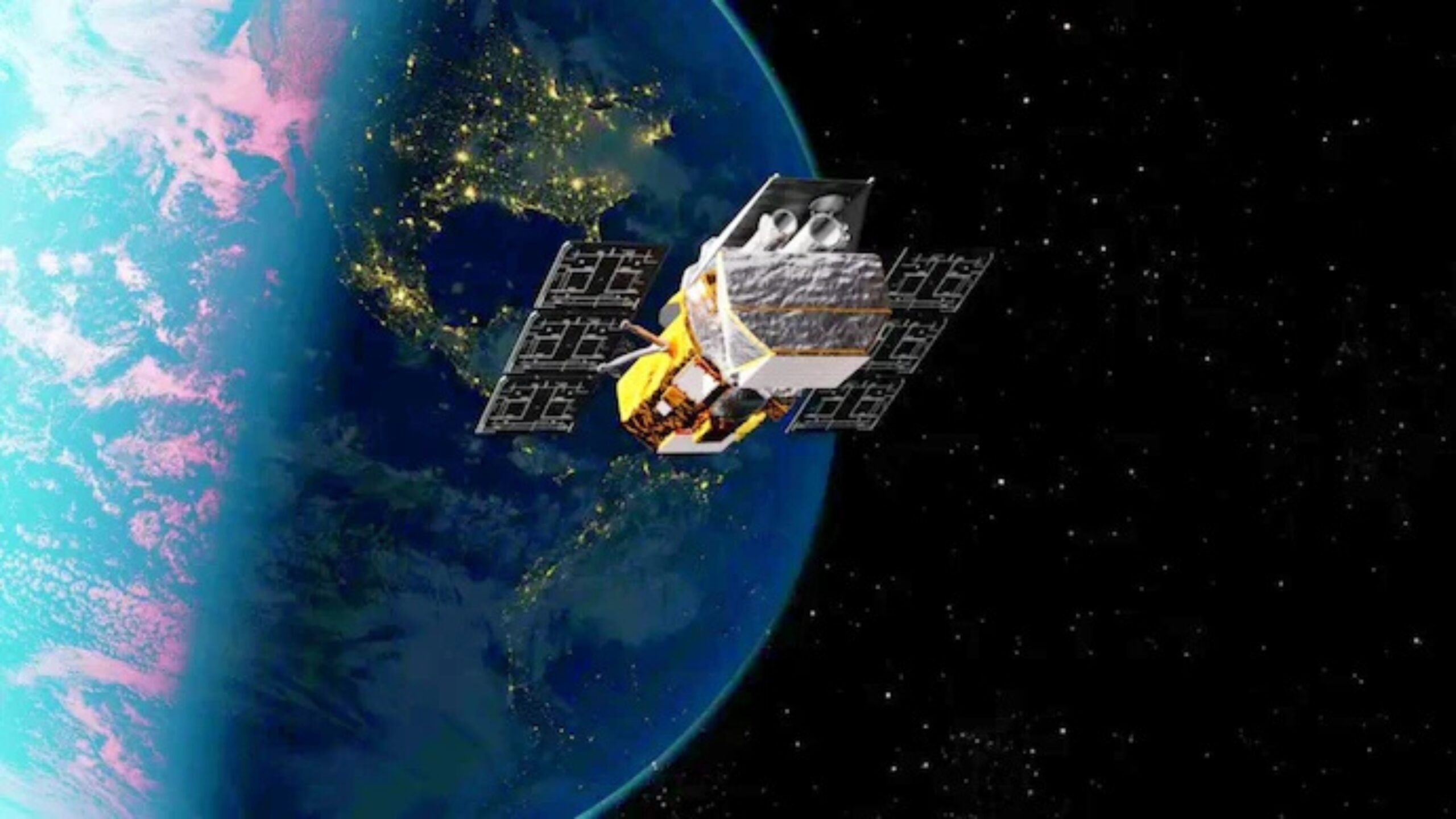
NASA is preparing an ambitious space rescue mission to save the Neil Gehrels Swift Observatory, which is gradually drifting closer to Earth. The telescope, launched in 2004, now faces orbital decay due to increased solar activity linked to Solar Cycle 25.
If successful, the mission could mark a historic milestone in commercial space operations. It would also extend the life of one of NASA’s most important space observatories by nearly a decade.
Why the Swift Observatory Is in Danger
NASA originally placed Swift into orbit at an altitude of about 600 kilometres above Earth. The telescope was designed to detect and study gamma-ray bursts, some of the most powerful explosions in the universe.
However, over the past few years, Swift’s orbit has steadily dropped below 400 kilometres. This decline happened because Solar Cycle 25 intensified activity on the Sun.
When solar activity rises, it heats Earth’s upper atmosphere. As a result, the atmosphere expands. This expansion increases drag on satellites in low Earth orbit. Consequently, Swift has experienced stronger atmospheric friction, which has slowly pulled it closer to Earth.
Without intervention, scientists expect the observatory to re-enter Earth’s atmosphere and burn up by the end of 2026.
NASA’s $30 Million Rescue Plan
To prevent that outcome, NASA signed a $30 million agreement with Catalyst Space Technologies, a private American aerospace company.
The company plans to launch a robotic spacecraft named LINK this summer. The spacecraft will dock with the Swift Observatory and use propulsion systems to push it back into a safer 600-kilometre orbit.
Unlike many modern satellites, Swift was not originally designed for in-space repairs or refuelling. Therefore, this docking operation presents unique technical challenges. Engineers must carefully align and attach the robotic vehicle without disrupting the telescope’s sensitive instruments.
If LINK successfully boosts Swift’s orbit, the observatory could continue its scientific mission for another ten years.
Temporary Suspension of Scientific Operations
To prepare for the rescue mission, NASA partially suspended Swift’s scientific operations on February 11. Engineers made this decision to stabilise the spacecraft and reduce operational risks before docking.
However, not all instruments have gone offline. The telescope’s Burst Alert Telescope (BAT) remains active. This instrument continues to scan the universe for gamma-ray bursts and other high-energy cosmic events.
By keeping BAT operational, NASA ensures that Swift can still contribute valuable data while awaiting rescue.
A Historic Moment for Commercial Space
If the mission succeeds, it will mark the first time a private company rescues a government satellite that was never designed for servicing in orbit. This breakthrough could reshape the future of satellite maintenance.
Moreover, it could open the door for commercial orbital repair services, reducing space debris and extending the lifespan of ageing satellites.
On the other hand, failure would mean Swift’s mission comes to an end. In that case, the spacecraft would eventually burn up during atmospheric re-entry.
Why Swift Still Matters
The Neil Gehrels Swift Observatory has played a crucial role in modern astronomy. For nearly two decades, it has helped scientists understand black holes, neutron stars, and distant cosmic explosions.
Even today, its ability to quickly detect and analyse gamma-ray bursts makes it a vital scientific tool. Therefore, extending its mission carries both scientific and symbolic importance.
What Happens Next?
All eyes now turn to the upcoming summer launch of LINK. Engineers will conduct detailed simulations and final checks before the mission begins.
If everything goes according to plan, Swift will rise back to its original altitude. As a result, the observatory could continue exploring the universe well into the next decade.
The mission represents more than a rescue. It highlights how public space agencies and private companies can work together to solve complex challenges in orbit.
For the latest updates, click here.