
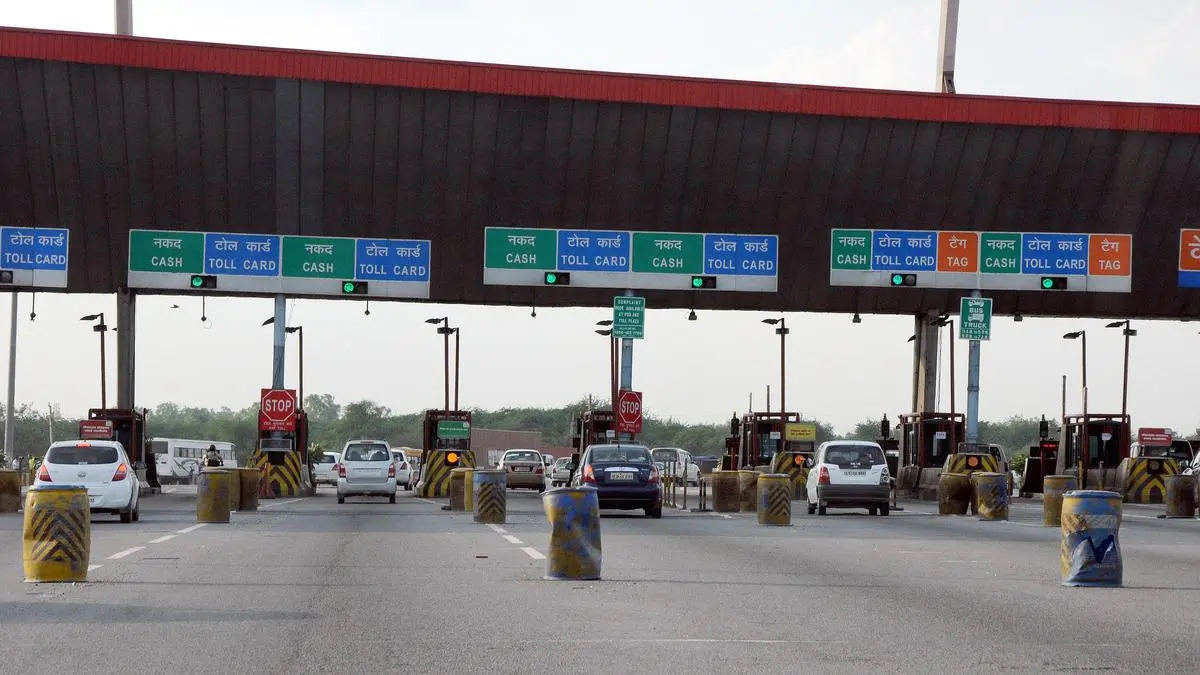
The central government has decided to completely stop cash payments at toll gates on national highways from April 1. From that date, vehicle owners must pay toll charges only through FASTag or UPI. Authorities will no longer accept cash at any toll plaza.
Why the Government Took This Decision
The move supports the Digital India initiative and promotes cashless transactions across the country. Officials aim to increase transparency in toll collection and prevent irregularities. In addition, the decision seeks to reduce long queues at toll plazas and ensure smooth vehicle movement.
Digital payments also allow contactless travel, which improves efficiency. As a result, commuters can expect faster clearance at toll gates and fewer delays during peak hours.
Current Status of FASTag Usage
FASTag adoption in India has already crossed 98 per cent. Earlier, drivers who paid in cash had to pay double the toll amount. Some motorists also chose cash payments when their FASTag accounts had insufficient balance. However, both options will end on April 1.
Going forward, drivers must ensure their FASTag accounts remain active and sufficiently funded. Alternatively, they can use UPI for toll payments wherever available.
FASTag Journey So Far
The government introduced FASTag as a pilot project in 2014. Later, it made FASTag mandatory for all vehicles in late 2019. Since then, digital toll collection has expanded rapidly across national highways.
In August 2025, authorities introduced an annual FASTag pass. The pass costs ₹3,000 and allows up to 200 trips. This option benefits frequent highway users by offering convenience and predictable expenses.
What This Means for Commuters
The complete shift to digital payments marks a major step in modernising highway infrastructure. The system is expected to reduce congestion, improve revenue monitoring, and enhance the overall travel experience.
Commuters should prepare for the transition by activating FASTag or enabling UPI payments before April 1. With this change, national highways will move toward a fully digital and more efficient toll collection system.
For the latest updates, click here.