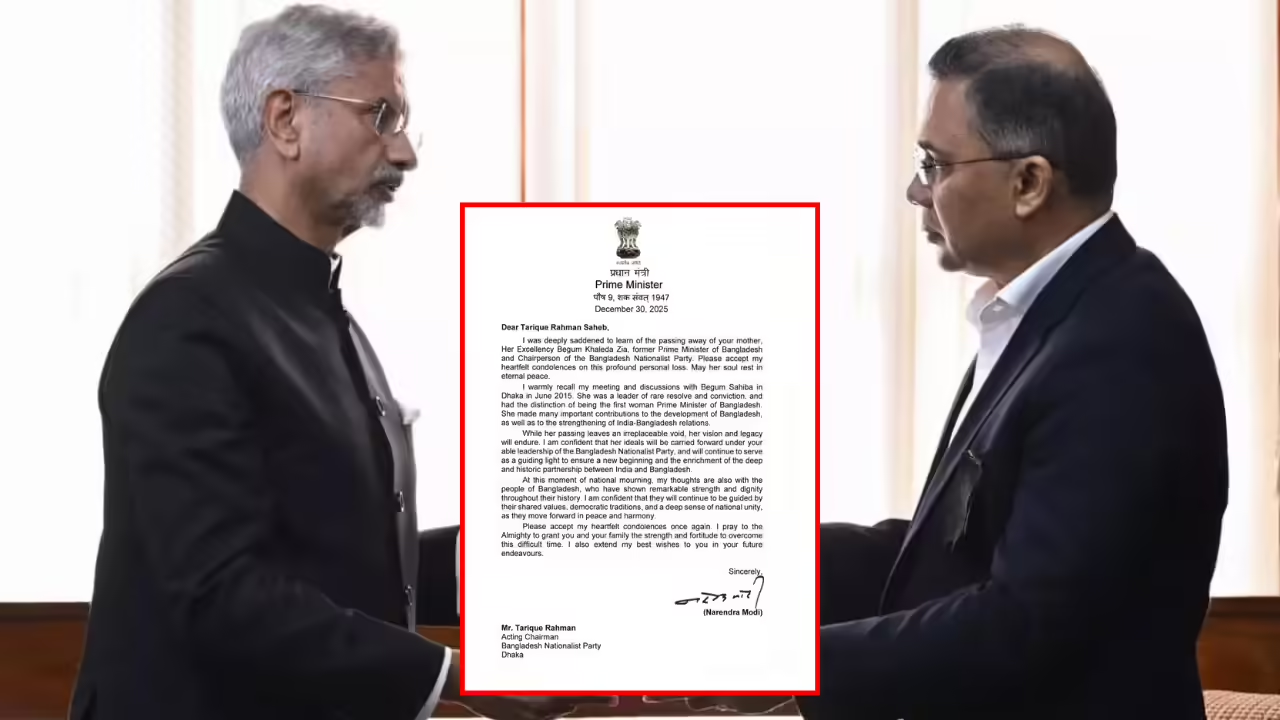
Indian Prime Minister Narendra Modi has expressed deep condolences over the passing of former Bangladesh Prime Minister and Bangladesh Nationalist Party (BNP) chairperson Begum Khaleda Zia. In a significant diplomatic gesture, PM Modi personally wrote a condolence letter to her son and BNP Acting Chairman Tariq Rahman.
External Affairs Minister S. Jaishankar, who visited Dhaka to attend Khaleda Zia’s funeral, handed over the letter to Tariq Rahman on Wednesday. This development has drawn attention in diplomatic circles, given the evolving political situation in Bangladesh.
Modi’s Tribute to Khaleda Zia
Begum Khaleda Zia passed away on December 30 at the age of 80. Representing the Indian government, Jaishankar attended her funeral and later met Tariq Rahman at the Parliament complex in Dhaka. During the meeting, he delivered PM Modi’s message.
In his letter, Modi described Khaleda Zia as “a leader with rare willpower and determination.” He recalled her historic role as Bangladesh’s first woman Prime Minister and acknowledged her contributions to the nation’s development.
Remembering Her Legacy
Modi also referred to his meeting with Khaleda Zia during his Dhaka visit in June 2015. He noted that her leadership played an important role in strengthening India-Bangladesh relations. “Her passing leaves an irreparable void. However, her vision and legacy will continue to inspire future generations,” the Prime Minister wrote.
Addressing Tariq Rahman directly, Modi expressed confidence that Khaleda Zia’s ambitions would carry forward under his leadership.
Diplomatic Significance Ahead of Elections
Notably, this marks the first visit by an Indian minister to Bangladesh since the formation of the interim government in August 2024. With Bangladesh scheduled to hold general elections on February 12, 2026, analysts see India’s outreach to BNP leadership as a strategic move.
In his message, PM Modi also expressed hope that Khaleda Zia’s legacy would guide efforts to deepen the historic partnership between India and Bangladesh, opening a new chapter in bilateral relations.
For more latest updates, click here.