
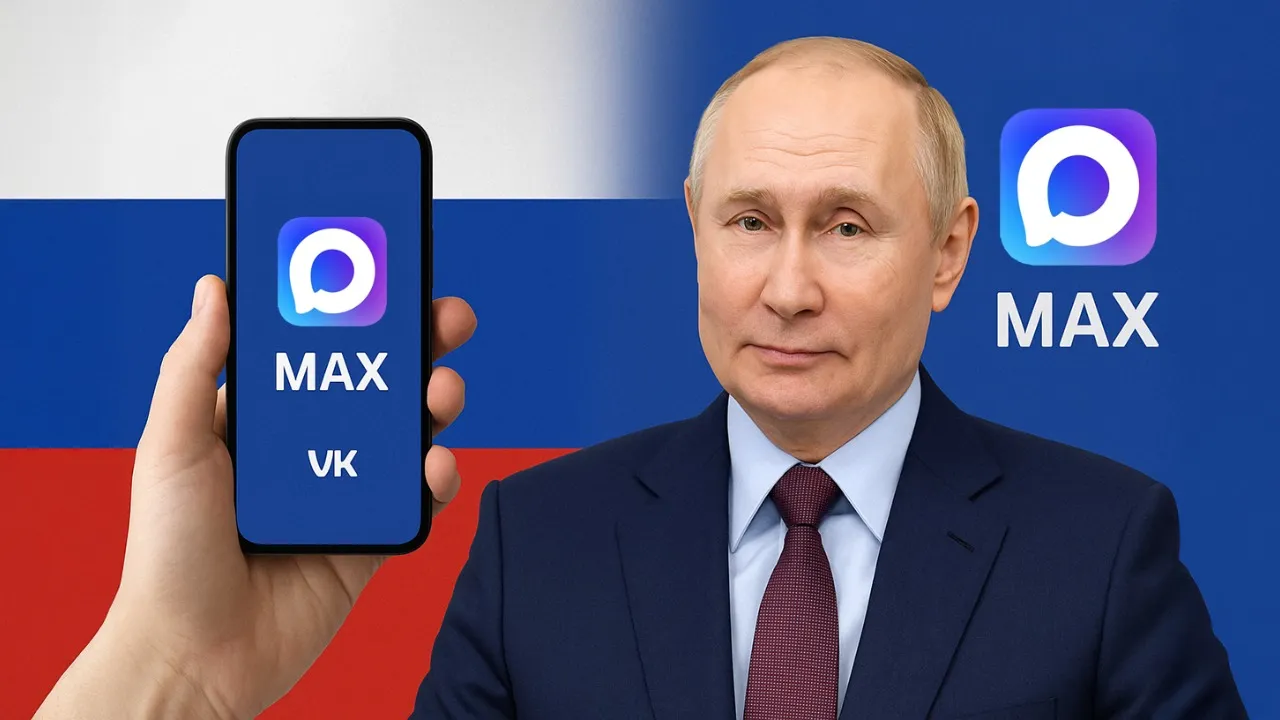
Russia has officially banned WhatsApp across the country and announced a transition to a new state-backed messaging platform called MAX. The move marks a significant shift in the nation’s digital policy and internet governance strategy.
Authorities say the decision aims to strengthen data security and promote domestic technology. However, critics argue that the ban could increase government control over online communication.
Government Pushes Shift to MAX Platform
The Russian government has positioned MAX as a comprehensive digital platform. Developed by Russian tech giant VK, the app forms a key part of the country’s broader plan to reduce reliance on foreign technology.
Unlike WhatsApp, MAX is designed as a multi-purpose application. It combines messaging services, online payments, and access to government services within a single platform.
Officials describe it as a “one-stop solution” for citizens. Therefore, the government expects it to replace not just WhatsApp but several other digital tools as well.
Internet Security Cited as Main Reason
Russia’s internet regulatory authority, Roskomnadzor, stated that national security concerns drove the decision. According to officials, foreign-owned apps pose risks related to data privacy and information control.
As a result, the government believes that a domestic alternative will offer better protection of national data.
Observers note that this move brings Russia closer to internet control models seen in countries like China and North Korea, where the state exercises tight oversight over digital platforms.
Mandatory Installation on Devices
To ensure widespread adoption, authorities have introduced strict implementation measures. The MAX app will come pre-installed on all smartphones and smart TVs sold in Russia.
This requirement aims to accelerate user transition and eliminate dependence on WhatsApp. Consequently, millions of citizens may soon rely exclusively on the state-backed platform for daily communication.
Privacy and Surveillance Concerns Raised
Despite official assurances, technology experts have expressed serious concerns. Unlike WhatsApp, MAX reportedly does not offer end-to-end encryption.
Furthermore, the app’s terms of service allow user data to be shared with government security agencies upon request. Critics argue that this provision increases the risk of digital surveillance.
As a result, privacy advocates warn that Russian citizens could face constant monitoring of their online activities.
Part of Broader Crackdown on Foreign Platforms
The WhatsApp ban follows a series of restrictions on Meta-owned platforms such as Facebook and Instagram since the start of the Ukraine war. Authorities have also imposed limitations on Telegram in recent months.
Through these measures, Russia appears to be tightening its grip on digital communication channels within the country.
A Major Shift in Russia’s Digital Landscape
The nationwide WhatsApp ban and rollout of MAX represent a turning point in Russia’s internet policy. While the government frames the move as a security measure, critics view it as a step toward deeper state control.
As the transition unfolds, the impact on digital freedom, privacy, and international tech relations will remain under close global scrutiny.
For the latest updates, click here.