
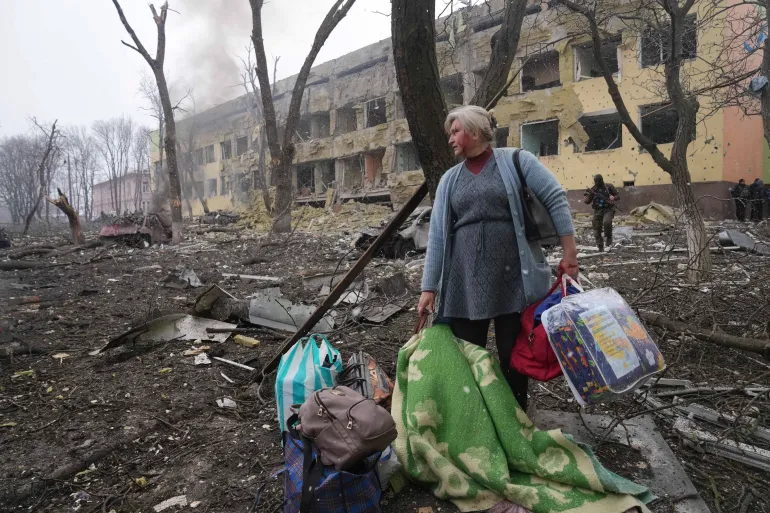
The Russia-Ukraine War is set to enter its fourth year on February 24, 2026. However, hopes for peace remain uncertain. Despite mediation efforts by the United States, negotiations have not produced a breakthrough. The key obstacle remains Moscow’s insistence on controlling the Donbas region and Kiev’s firm refusal to concede it.
War Now Longer Than Soviet World War II Campaign
The conflict has lasted longer than the 1,418-day “Great Patriotic War” fought by the Soviet Union against Nazi Germany. Although Russia failed to capture Kiev in the early stages, it now controls nearly 20% of Ukrainian territory. This includes Crimea, annexed by Russia in 2014.
Despite these gains, the battlefield situation remains complex and costly.
Massive Casualties on Both Sides
Human losses have reached staggering levels. The Centre for Strategic and International Studies estimates total casualties—dead, wounded, or missing—at 1.8 million. Other projections suggest the number may approach 2 million.
Reports indicate approximately 325,000 Russian soldiers and 140,000 Ukrainian soldiers have died. These figures highlight the devastating human toll, making it Europe’s deadliest conflict since World War II.
Slow and Grinding Military Progress
Russian advances remain extremely slow. Forces moving toward Pokrovsk have progressed at an average rate of just 70 meters per day over the last two years.
Mark Rutte described the pace as “snail-paced,” reflecting the grinding and attritional nature of the war.
Drones Reshape Modern Warfare
The conflict has marked a turning point in military technology. Russia deploys hundreds of drones daily to strike Ukraine’s power grid and infrastructure. It has also used advanced fibre-optic drones to avoid electronic jamming.
In response, Ukraine launched “Operation Spiderweb” targeting Russian airbases. Ukrainian sea drones have also sunk several Russian warships, showing how unmanned systems now play a decisive role on land and sea.
Diplomatic Pressure Mounts
Ukrainian President Volodymyr Zelenskyy recently revealed that Washington has set a June deadline for a possible peace agreement. If negotiations fail, the U.S. administration may increase pressure on both sides to settle.
However, deep mistrust and opposing territorial demands continue to block progress.
Expanding Battlefield
Ukraine continues to strike targets deep inside Russian territory. Recently, Ukrainian forces attacked the Votkinsk Machine Plant, located nearly 1,400 kilometres from the border.
Such strikes demonstrate that the war’s scope is widening, even as frontline movement remains limited.
No Clear End in Sight
As the war enters its fourth year, both sides remain entrenched. The humanitarian cost continues to rise, and diplomatic solutions remain distant.
Without compromise on key territorial issues, the conflict shows no immediate signs of ending.