
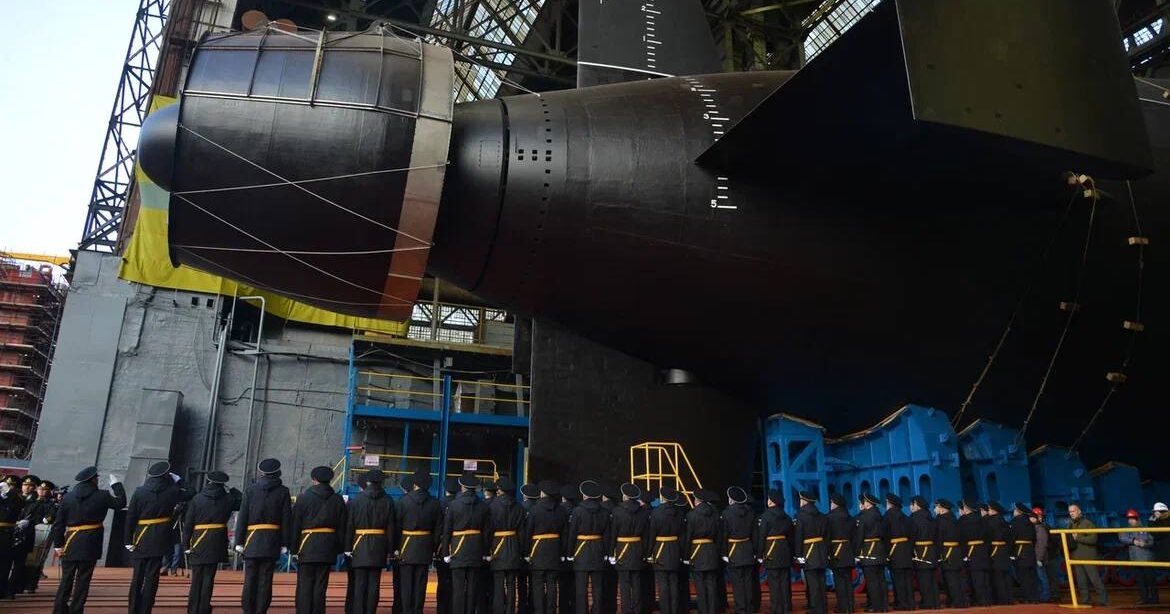
Underwater warfare will no longer be familiar as Russia unleashed its first nuclear-powered submarine ‘Khabarovsk’. It is designed to deploy what the world dubs as ‘Doomsday Drone’ – an autonomous underwater missile weapon which is capable of cruising through shallow depths and wiping coastal nations off the map across several thousand kilometres – on November 1.
The latest Russian submarine, part of Project 09851, is a chilling reminder of the unprecedented damage it could unleash upon the target country in an era where the US is threatening the entire globe with its nuclear tests. These silent hunters blend cutting-edge stealth technology, hypersonic missiles, and AI-driven sensors, turning the ocean floor into a high-stakes chessboard.
As nations scramble to bolster their fleets to maintain the status quo, this article will shed light on the killing machines in possession of nuclear-armed countries.
Doomsday Shadow: Inside Russia’s Khabarovsk submarine

At 120 metres long and displacing 10,000 tons, the ‘Khabarovsk’ glides through waters at speeds topping 25 knots, powered by a revolutionary liquid metal-cooled reactor that minimises noise and heat signatures. Its crown jewel? The Poseidon drone, a 24-metre titanium torpedo that can evade defences, travel intercontinentally, and detonate with yields up to 100 megatons, enough to contaminate coastlines for decades. Russian officials hail it as an ‘unstoppable guardian’ of national sovereignty, but Western analysts warn it escalates the arms race, echoing Cold War brinkmanship in 2025’s volatile climate.
This isn’t Russia’s only ace. The Yasen-M class, a multi-role attack submarine, complements the Khabarovsk with 32 vertical-launch tubes for Oniks hypersonic missiles screaming at Mach 2.5 over 600 kilometres. With a crew of just 90 thanks to automation, these 13,800-ton titans prowl undetected, armed with 533mm torpedoes that could sink carriers in minutes. As one naval expert notes, “In the world of advanced nuclear submarines 2025, Russia’s fleet is the wolf pack nations fear most.”
America’s Underwater Arsenal: Seawolf and Virginia-Class lead the pack
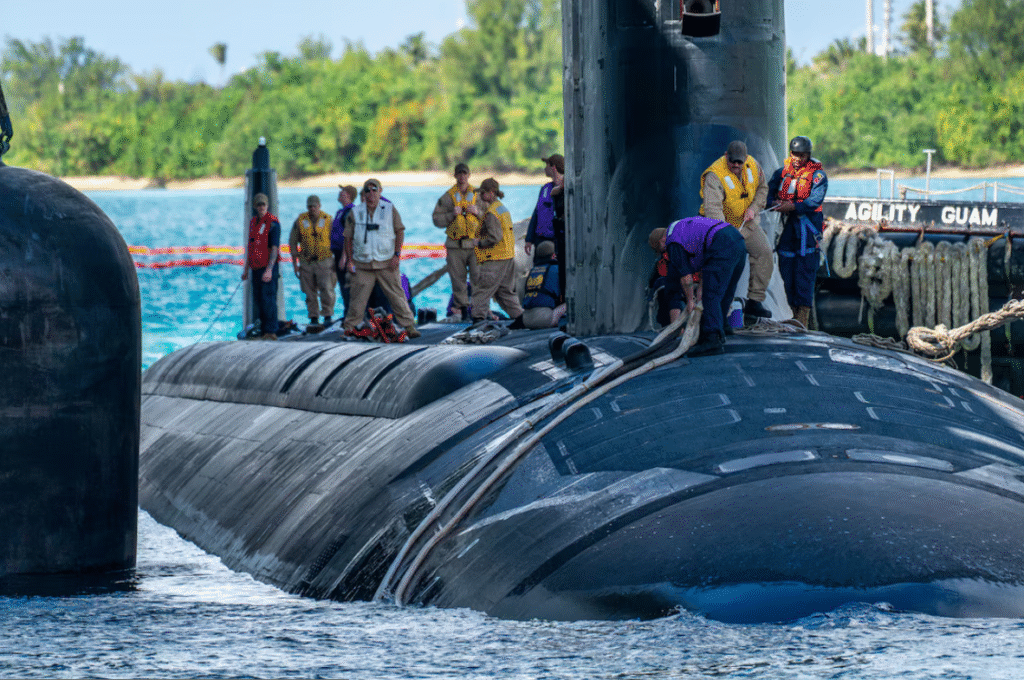
Across the Atlantic, the United States of America counters with its own symphony of silence. The Seawolf-class submarines, like the USS Jimmy Carter, boast speeds exceeding 35 knots submerged and pump-jet propulsors that render them nearly inaudible, perfect for hunting enemy subs in contested waters. Equipped with eight torpedo tubes firing Mk 48 wire-guided heavies and Tomahawk cruise missiles, these 9,138-ton predators dive beyond 800 feet, embodying US dominance in antisubmarine warfare.
Enter the Virginia-class Block V, the Navy’s workhorse for 2025 and beyond. At 7,900 tons, these modular marvels feature photonic masts for periscope-free ops and a Virginia Payload Module packing 28 Tomahawks for precision strikes. Their lockout chambers deploy special forces undetected, ideal for littoral missions near hostile shores. With several Block IV variants commissioned this year, including the USS Massachusetts, the US is ramping up production amid ballooning budgets, a $100 billion push for 15 more hulls by year’s end. “These aren’t just boats; they’re floating command centres,” says a Pentagon insider, underscoring their role in countering China’s naval surge.
Europe’s Silent Sentinels: Astute and Barracuda push boundaries

The United Kingdom’s Astute-class submarines, the largest fast-attack boats in the Royal Navy, tip the scales at 7,400 tons with self-sustaining systems for 90-day patrols, generating oxygen and water en route. Armed with 38 weapons, including 1,000-kilometre Tomahawks and 50-kilometre Spearfish torpedoes, their 3D-modelled hulls and advanced sonars detect threats from afar, making them vital for NATO’s northern flank.
France’s Barracuda-class (Suffren variant) ups the ante with ultra-quiet pump-jets and a 70-day endurance rating. Displacing 5,300 tons, these subs carry 20 weapons like MdCN cruise missiles (1,000 km range) and F21 torpedoes, plus dry deck shelters for commando raids. Integrated into NATO exercises, they symbolise Europe’s resolve against hybrid threats from Moscow.
Asia’s Rising Tide: China’s Shang-Class enters the fray

No rundown of advanced nuclear submarines 2025 would be complete without China’s Type 093B Shang-class. These 7,000-ton attackers feature vertical launch tubes for YJ-18 anti-ship missiles (500+ km) and improved anechoic coatings, slashing acoustic profiles. Clocking 25 knots, they’re the People’s Liberation Army Navy’s bid for blue-water supremacy in the South China Sea, where territorial spats continue to simmer. As Beijing commissions more, experts predict a ‘submarine gap’ will narrow with US allies by the end of the decade.
Global implications: Where does India stand?
The debut of Khabarovsk arrives as South Korea eyes its first nuclear-powered submarine by the mid-2030s, pending US fuel approval, a move Seoul frames as defensive amid North Korean provocations and Chinese assertiveness. Japan debates similar upgrades, while India counters Pakistan’s incoming Chinese-built Hangor-class diesels with its own nuclear fleet expansion.
At the heart of India’s sea-based nuclear triad lies the Arihant-class, homegrown ballistic missile submarines (SSBNs) that ensure a survivable second-strike against nuclear foes. Leading the pack is INS Aridhaman (S4), the 7,000-ton behemoth wrapping up sea trials for a December 2025 commissioning.
Armed with 24 K-4/K-5 submarine-launched ballistic missiles (SLBMs) reaching 5,000+ km, capable of striking Beijing from the Bay of Bengal. Aridhaman boasts an 83 MW pressurised water reactor, anechoic stealth coatings, and pump-jet propulsion for 24-knot sprints.
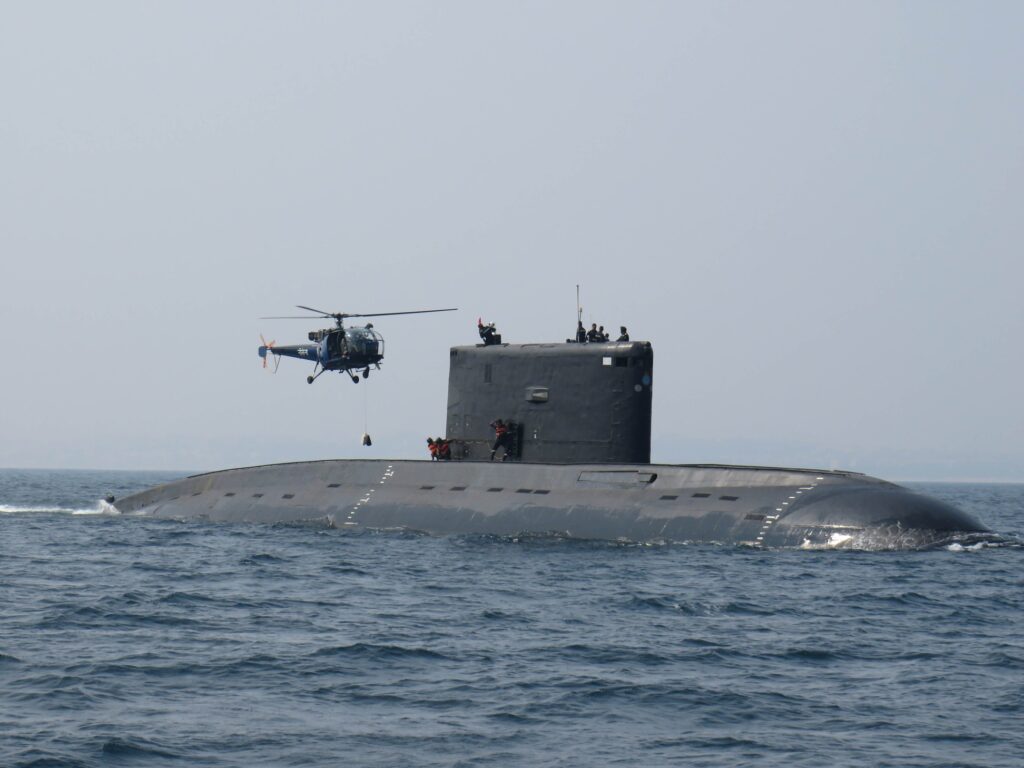
India is striving to close the gap
Flanking it are INS Arighat (commissioned August 2024) and the trailblazing INS Arihant (operational since 2016), each packing 12 missiles and Varunastra torpedoes for close-quarters defence.
But India’s nuclear punch isn’t all indigenous. The leased Russian Akula-class attack submarine (SSN) INS Chakra-III, an 8,140-ton hunter-killer with 190 MW power and 40+ weapons, including 300 km Club-S cruise missiles, is set for delivery by year-end, filling a critical gap until homegrown SSNs arrive. These vessels outmatch regional rivals: Compared to China’s Type 094 (JL-2 missiles, 7,400 km range), Arihants offer superior accuracy via DRDO guidance, while Akulas’ 30+ knot speeds eclipse Pakistan’s Agosta-90B diesels. With a new Visakhapatnam base for nuclear assets, India now sustains round-the-clock deterrence patrols, a feat achieved just months ago.
Yet, amid the dread, there’s a silver lining. Treaties like the unratified UN nuclear ban push for transparency, and joint exercises foster uneasy trust. As the Khabarovsk vanishes into the murk, one thing is clear: In 2025, the ocean’s roar hides whispers of war or wary peace.