
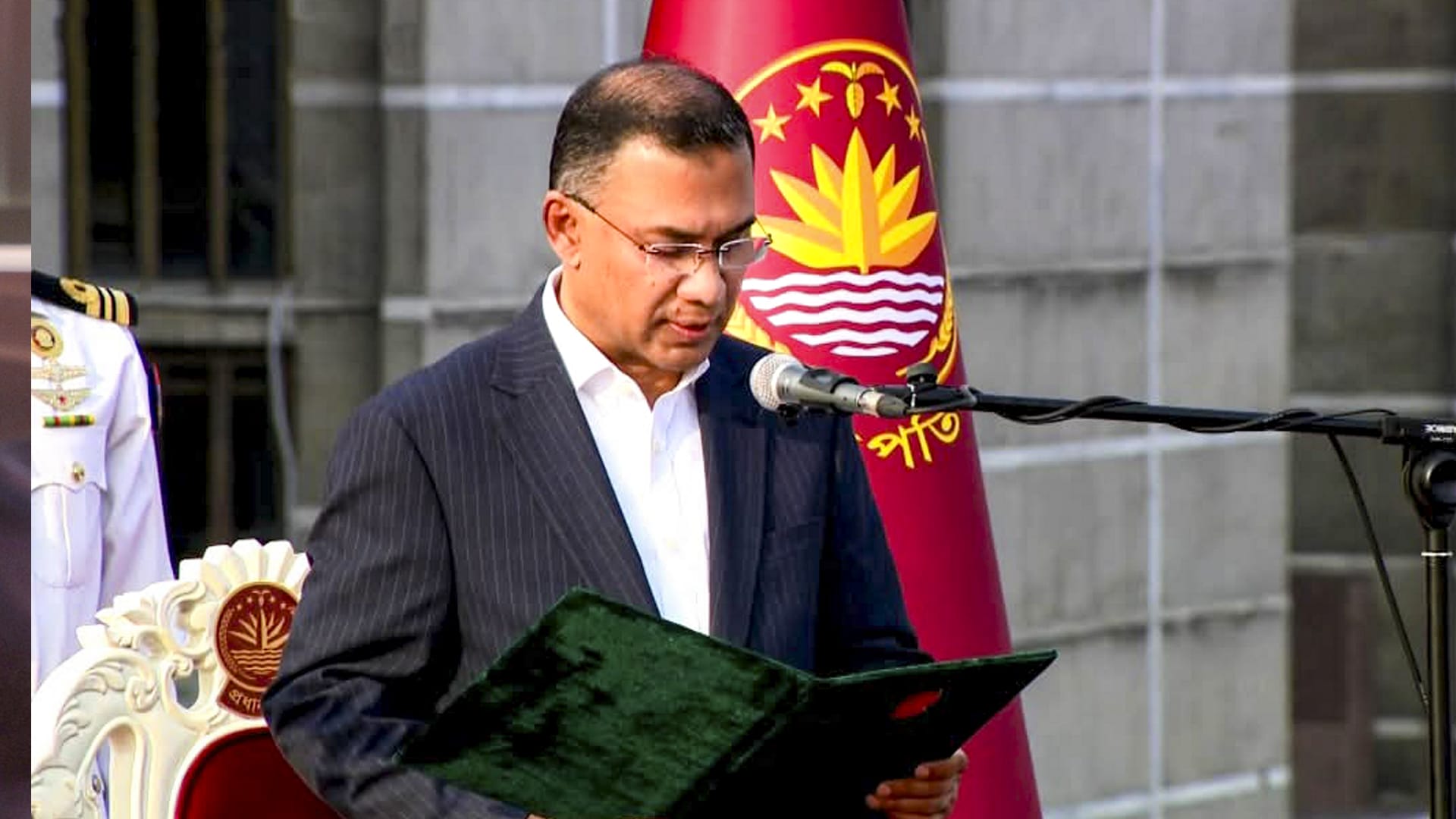
Tarique Rahman took office as the 11th Prime Minister of Bangladesh on Tuesday, February 17, 2026, after a landslide victory by the Bangladesh Nationalist Party (BNP). This marks a historic moment as he becomes the first male Prime Minister in Bangladesh in 35 years.
BNP Secures Landslide Victory
In the 13th parliamentary elections held on February 12, the BNP won 209 out of 299 seats. Following the victory, President Mohammed Shahabuddin administered the oath of office to Tarique Rahman and his 50-member cabinet. The cabinet includes 25 ministers, 24 assistant ministers, and three technocrats.
Parliamentary Procedures and Representation
In a historical first, the Chief Election Commissioner, AMM Nasir Uddin, administered the oath to all newly elected MPs. Tarique Rahman, who won in two constituencies, chose to represent Dhaka-17 in Parliament.
Political Tensions in the Transition
Despite BNP’s victory, some political friction emerged. BNP MPs refused to sign the Constitutional Reform Council oath, stating they were not elected as council members. An 11-party alliance, including Jamaat-e-Islami, which secured 68 seats, initially threatened a boycott. However, they eventually took their oaths separately, maintaining parliamentary participation.
Key Challenges Ahead
Political analysts suggest that Tarique Rahman’s government faces several major challenges. These include tackling Islamic extremism and managing unrest that occurred during the 18-month tenure of the interim government led by Muhammad Yunus.
International Recognition
The swearing-in ceremony drew international attention. Om Birla attended the event as a representative of the Indian government, extending congratulations to the new administration.
The BNP-led government begins its tenure amid high expectations from citizens and global observers. How the administration addresses domestic unrest and fosters political stability will define Bangladesh’s political landscape in the coming years.
For the latest updates, click here.