
New Rule Aims to Boost Transparency
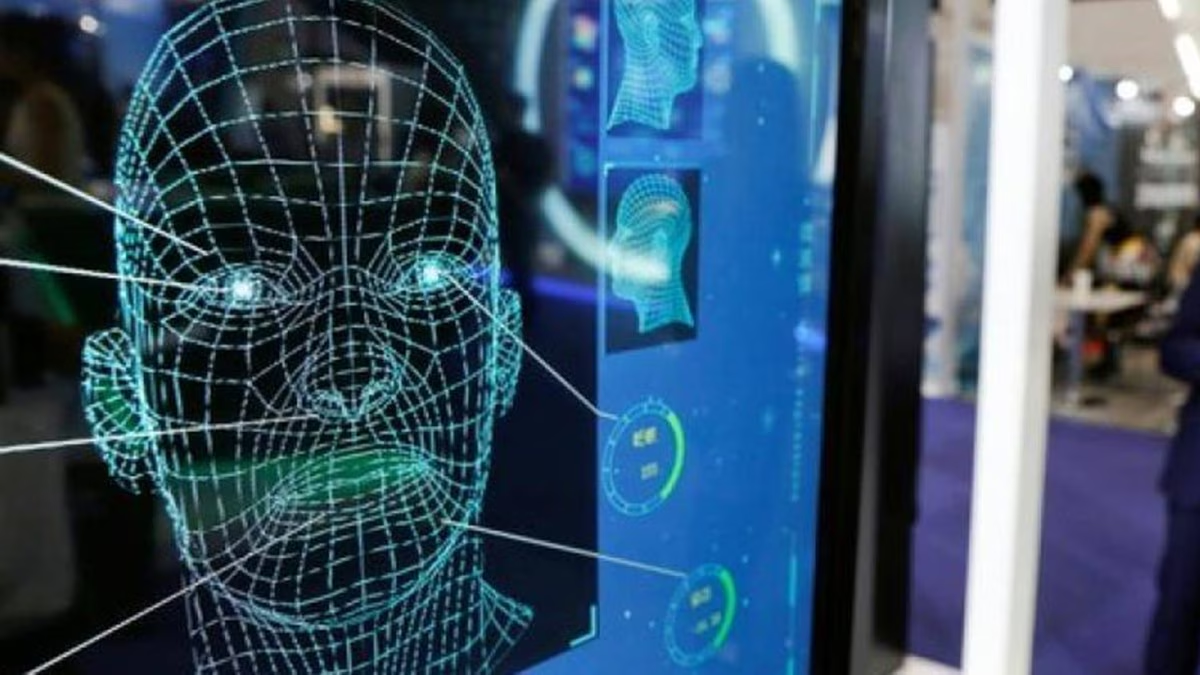
The Union Public Service Commission (UPSC) has introduced a major change in the conduct of its examinations. To improve transparency and prevent irregularities, the commission has made face authentication mandatory for candidates appearing in all UPSC entrance exams. UPSC clarified that every candidate will undergo facial verification at the examination centre.
AI-Based Verification Rolled Out
According to a reports, UPSC has already tested artificial intelligence-based facial authentication technology through a pilot project. The commission implemented this system during the NDA II, NA II, and CDS II examinations held on September 14, 2025. Officials conducted the pilot at select examination centres in Gurugram.
During the process, authorities digitally scanned candidates’ faces and matched them with photographs submitted in their application forms. The system successfully identified candidates within seconds, ensuring accurate verification.
Verification Completed in Just 10 Seconds
UPSC Chairman Ajay Kumar stated that the new system has significantly reduced verification time. On average, the authentication process now takes only 8 to 10 seconds per candidate. He explained that this change not only saves time but also adds an extra layer of security to the examination process.
Move to Curb Exam Irregularities
UPSC aims to use advanced technology to detect impersonation and other unfair practices. Officials believe that AI-powered face authentication will help eliminate identity-related fraud and ensure that only genuine candidates appear for the exams.
Applies to All Major UPSC Exams
UPSC conducts several prestigious recruitment examinations, including the Civil Services Examination, to fill top government positions such as IAS, IPS, and IFS. With this new rule, face authentication will become a standard procedure across all UPSC exams in the coming cycles.
The decision marks a significant step towards modernising India’s examination system while maintaining fairness, efficiency, and trust in the recruitment process.
For more latest updates, click here.