
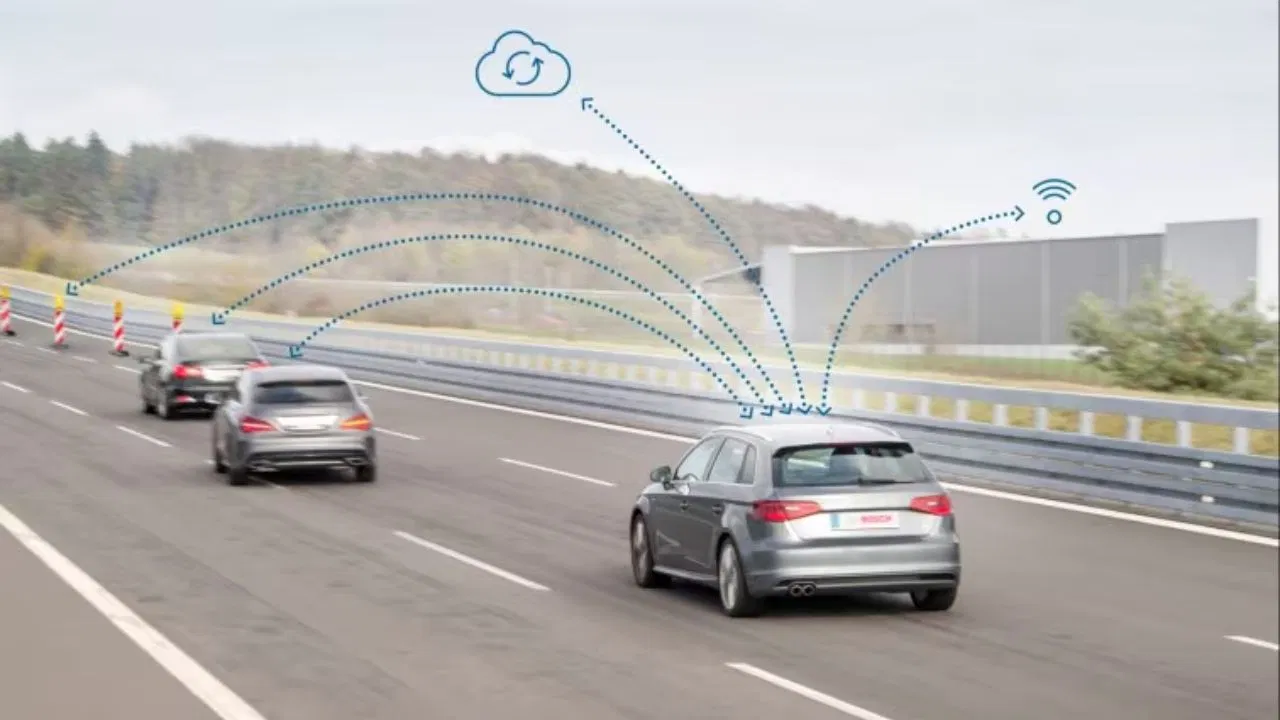
In a major step to curb rising road accidents, the Central government has decided to make vehicle-to-vehicle (V2V) technology mandatory across the country. Union Minister for Road Transport and Highways Nitin Gadkari announced the decision after the 43rd Transport Development Council meeting held in New Delhi.
The move aims to significantly reduce road accident deaths and improve real-time road safety for drivers.
How V2V Technology Will Improve Road Safety
Under the V2V system, vehicles will exchange information wirelessly and alert drivers in advance. Through this technology, drivers will receive real-time data such as speed, location, and sudden braking of nearby vehicles. As a result, motorists can react faster and avoid collisions.
Moreover, the system will also warn drivers about vehicles in blind spots. Officials explained that an on-board unit (OBU) installed in vehicles will deliver these alerts. The estimated cost of the device ranges between Rs. 5,000 and Rs. 7,000.
Free Spectrum Allocation for V2V Communication
Meanwhile, Gadkari revealed that the Department of Telecommunications has agreed in principle to support the initiative. It will allocate 30 MHz of spectrum in the 5.875–5.905 GHz band free of cost for V2V communication.
Transport Secretary V. Umashankar stated that the government plans to implement the V2V policy fully within this year.
Strict Action Against Sleeper Bus Irregularities
At the same meeting, Gadkari took strong exception to irregularities in sleeper bus construction. He said that six bus fire incidents in recent months led to the deaths of 145 people.
Accordingly, the Centre has ordered strict action against companies violating safety norms. Gadkari confirmed that he has written to several state governments, including Rajasthan, seeking detailed investigations. Going forward, only automobile manufacturers or Central government–approved firms can build sleeper buses.
Additionally, the government has mandated safety features such as fire detection systems, emergency lighting, and emergency exits in existing buses.
Target to Cut Road Deaths by 50 Percent by 2030
Expressing concern, Gadkari said nearly 1.8 lakh people die in road accidents every year in India. Alarmingly, 66 percent of the victims belong to the 18–34 age group.
Therefore, the government has set a target to reduce road accident deaths by 50 percent by 2030. To achieve this, it plans to introduce 61 amendments to the Motor Vehicles Act.
Cashless Treatment Scheme Rolled Out Nationwide
In another major relief measure, the Centre has rolled out a nationwide cashless treatment scheme for road accident victims. Under this scheme, injured persons can receive free medical treatment up to Rs. 1.5 lakh for seven days.
According to officials, this initiative will ensure timely medical care and save thousands of lives every year.
For more latest updates, click here.