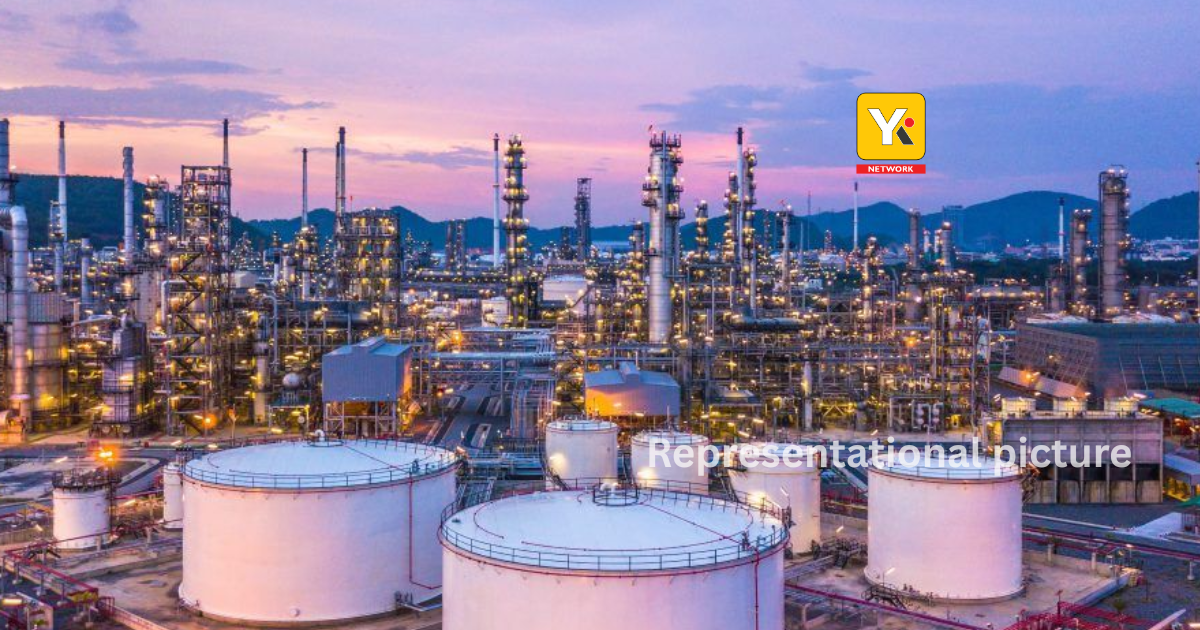
Deep beneath the sunbaked coasts of Andhra Pradesh and Karnataka lies an invisible shield. A vast network of underground caverns carved into solid rock, sealed with steel, and guarded with military precision. Inside them, not treasure or weapons, but something equally powerful: Crude oil.
These are India’s Strategic Petroleum Reserves (SPRs), the nation’s insurance policy against energy shocks, wars, or global market meltdowns. They exist quietly, untouched, waiting for the day the world above runs out of fuel.
What are India’s Strategic Petroleum Reserves?
Unlike the oil that flows daily into refineries and fuel pumps, SPR oil is never meant to be touched in normal times. When ships stop, supply chains snap, or prices skyrocket, that’s when these strategic petroleum reserves come into play.
As one energy expert puts it, “When the world stops running, the nation doesn’t.” That’s peace of mind — in barrels.
India imports nearly 85% of its crude oil, making it the third-largest oil consumer in the world. Domestic production has fallen behind, even as demand rises with industrial growth. “Dependence on imports will remain large,” admits a senior petroleum ministry official. “That’s why these reserves are essential for our national security.”
Crude oil crisis that changed the world
To understand India’s reserves, rewind to the 1970s oil shocks. Twice in that decade, political turmoil in West Asia throttled global supply and sent prices soaring. Economies crumbled, fuel stations went dry, and governments panicked. The lesson was clear: oil isn’t just fuel; it’s power.
In 1974, the International Energy Agency (IEA) was formed. Its member nations pledged to stockpile at least 90 days of oil imports as an emergency cushion.
India, still industrialising and not yet an IEA member, watched closely. But the idea of having a national fuel vault was seeded.
India’s real tryst with strategic reserves began in 2004, when the government set up Indian Strategic Petroleum Reserves Limited (ISPRL). Three massive underground caverns were constructed in Visakhapatnam (1.33 million tonnes), Mangaluru (1.5 million tonnes), and Padur (2.5 million tonnes).
Together, these hold roughly 9.5 days of the nation’s oil needs — a small but vital buffer.
The engineering feat came at a cost. Excavating rock, waterproofing tunnels, and installing security systems ballooned costs from ₹2,400 crore to ₹4,100 crore. But for policymakers, the question wasn’t ‘how much’. It was ‘can we afford not to?’
Phase II: Deeper, bigger and safer
In 2021, the Union government approved Phase-II, expanding Padur and adding a new 4-million-tonne site at Chandikhol, Odisha. Once complete, India’s cover will reach 21 days, still short of the IEA benchmark but a major leap forward.
Plans are already on paper for new reserves in Rajasthan, Mangaluru, and Bina, Madhya Pradesh, with the long-term goal of hitting the 90-day mark. But it’s a slow march — each site takes years of surveys, drilling, and construction.
Also read Oil India strikes natural gas in Andaman offshore block
Oil fortress of the world
Globally, the US leads the SPR race with a staggering 700 million barrels buried under Texas and Louisiana. China, the new contender, has quietly built reserves exceeding 500 million barrels, buying cheap oil from Russia to fill them. Japan sits atop 130 days of cover, South Korea 240, while European nations vary between 60 and 100 days.
Closer home, Pakistan struggles with barely a month’s worth of supply — a vulnerability that has haunted its military planners since the 1971 war.
India’s reserves, in comparison, are modest — but growing.
A diplomatic tool and a business opportunity
Strategic reserves are no longer just silent stockpiles. They’re becoming active tools of diplomacy and economics. In 2021, when major nations released SPR oil to cool global prices, India released 5 million barrels — a symbolic but significant step showing its readiness to act as a responsible global player.
Now, the Central government is moving toward public-private partnerships. Companies like Abu Dhabi National Oil Company (ADNOC) lease space in Indian reserves, holding rights to their oil but releasing it during Indian crises.
This arrangement brings foreign investment, technical expertise, and flexibility, turning storage into opportunity. India can also trade oil smartly: Buying low, selling high, and even leasing capacity abroad.
The Sri Lankan connection
Enter the Trincomalee oil tank farm in Sri Lanka, a relic from World War II, now being revived by India, Sri Lanka, and the UAE. Located on a crucial shipping lane, it gives India a strategic outpost and a buffer outside its borders.
But with China investing heavily in Sri Lankan ports and pipelines, this partnership isn’t just about oil — it’s geopolitics at work. Building SPRs isn’t cheap. Each site can take six years and billions of rupees to complete. Maintaining them adds annual costs for security, inspection, and oil quality.
Yet the real value of SPRs lies in what they prevent: Factory shutdowns, inflation, or economic paralysis during a crisis. They are insurance policies no nation can skip. Still, experts warn against putting all reserves near the coast. That’s why Rajasthan’s inland caverns, safe from blockades and missile threats, are the next big focus.
Oil for tomorrow’s India
Even as the world shifts toward renewables, oil remains the bloodstream of economies. For a rapidly growing nation, energy security means survival. India’s SPRs are more than underground tanks. They are shields, bargaining chips, and perhaps soon, profit centres.
The future may lie in a hybrid model with state and private players, domestic and foreign storage, backed by AI systems predicting market shocks.Next time you fill your tank, remember: somewhere in the depths of the Indian earth, barrels of calm await the day the world goes dark.