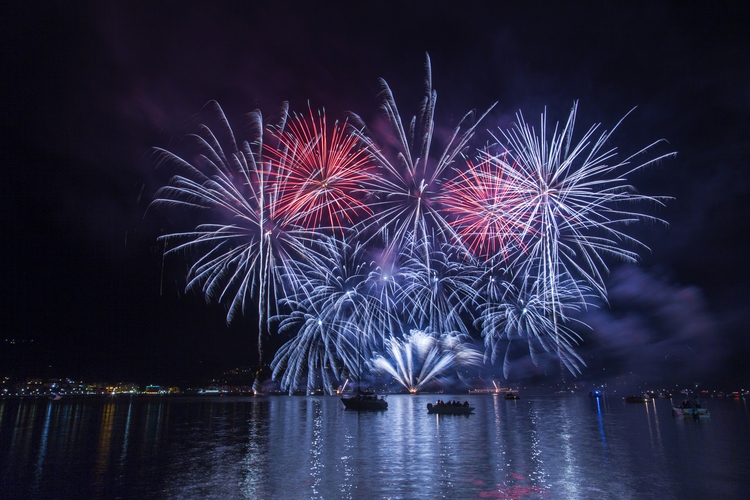
As the world prepares to bid farewell to 2025 and welcome 2026, not everyone celebrates the New Year at the same moment. Due to the Earth’s rotation and the division of time zones, different countries welcome January 1 at different hours. While some regions raise a toast early, others wait almost a full day longer to join the celebrations.
First Place to Welcome the New Year
The honour of welcoming the New Year first goes to Kiritimati Island, also known as Christmas Island, in the Pacific Ocean. It is part of the island nation of Kiribati and lies close to the International Date Line. When the clock strikes midnight here, much of the world is still on December 31.
Interestingly, Kiritimati has villages named Paris, London and Poland. As 2026 begins here, several countries are still enjoying the final hours of New Year’s Eve.
New Zealand and Australia Join Next
After Kiritimati, celebrations move to New Zealand and Australia. New Zealand’s Chatham Islands welcome the New Year first, followed by cities like Auckland and Wellington. Soon after, Australia lights up the sky with grand fireworks.
Sydney’s Harbour Bridge fireworks attract global attention, while cities such as Melbourne and Adelaide also host large-scale celebrations.
When India Celebrates
By the time India celebrates New Year at midnight on December 31, countries like Japan, South Korea and China have already welcomed 2026. After India, the New Year travels westward to Europe, including London and Paris, and later reaches the Americas.
The Last Place to Say Happy New Year
The final place on Earth to welcome the New Year is American Samoa, located in the Pacific Ocean. It follows the UTC-11 time zone, making it the last region to enter January 1. When it is midnight in American Samoa, many countries have already spent most of the day celebrating.
A Journey Across Time Zones
The New Year’s journey begins in Kiritimati and ends in American Samoa. Though the date remains the same worldwide, time zones create a unique global celebration that unfolds over nearly 26 hours, reminding us how one moment is shared differently across the planet.