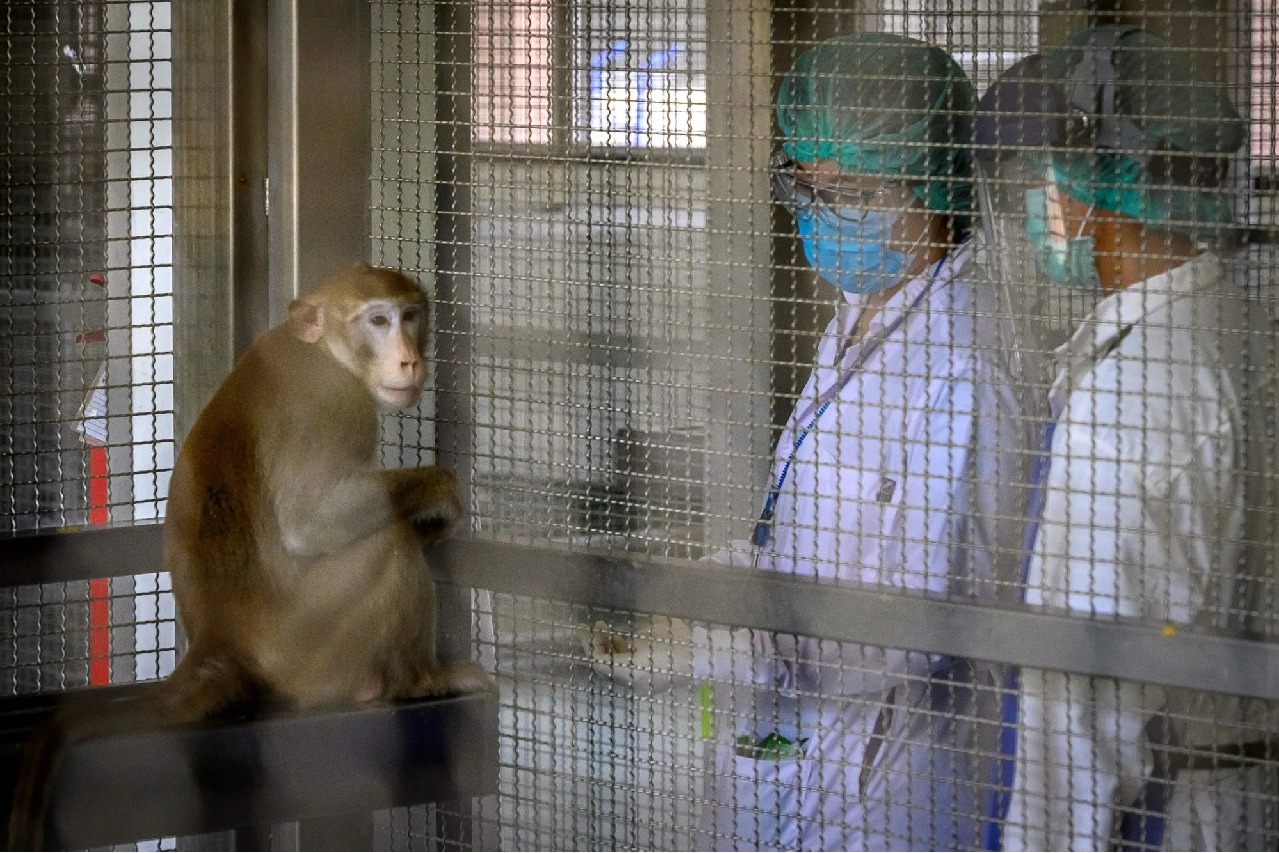
China is currently facing an unexpected crisis — a severe shortage of monkeys required for medical research and clinical drug trials. The situation has pushed prices to record levels, with each laboratory-bred monkey now costing nearly Rs 25 lakh, according to industry sources.
Monkeys play a crucial role in the pharmaceutical industry, especially during the development and testing of new medicines. Before drugs reach human trial stages, researchers test them on animals to evaluate safety and effectiveness. In China, monkeys are widely used for this purpose due to their biological similarity to humans.
However, despite the presence of large monkey populations in forests, researchers cannot directly use wild monkeys for clinical trials. Chinese law strictly prohibits the use of forest-caught monkeys in drug testing. Moreover, wild monkeys often carry unknown diseases, which can distort research outcomes and pose biosecurity risks.
Breeding Delays Deepen the Crisis
To meet laboratory requirements, authorities collect monkeys from forests only for breeding purposes. These animals are raised in specially regulated breeding centers, and only second-generation monkeys born in controlled environments qualify for experiments. This process, however, is time-consuming.
Experts explain that it takes a minimum of four years for a monkey to grow and become suitable for clinical research. As a result, breeding delays have created a supply gap, especially at a time when demand for new drug trials has increased sharply.
Prices Skyrocket After Post-Covid Demand
The shortage has triggered a dramatic rise in prices. At the beginning of this year, the cost of a single laboratory monkey stood at around 1.5 lakh yuan, roughly Rs 13 lakh. Now, due to rising demand and limited supply, prices have surged to nearly 1.93 lakh yuan, equivalent to about Rs 25 lakh per monkey.
Interestingly, a similar price spike occurred during the Covid-19 pandemic, when global vaccine and drug trials peaked. Although prices stabilized briefly afterward, the renewed surge in pharmaceutical research has once again driven costs upward.
Impact on Drug Development
Industry insiders warn that the shortage is increasing drug development costs and delaying research timelines. Pharmaceutical companies now face longer waiting periods to access test subjects, which could slow the introduction of new medicines into the market.
As China continues to expand its role in global drug research, experts say strengthening breeding infrastructure will be essential to avoid long-term disruptions in clinical trials and pharmaceutical innovation.
For more latest updates, click here.