
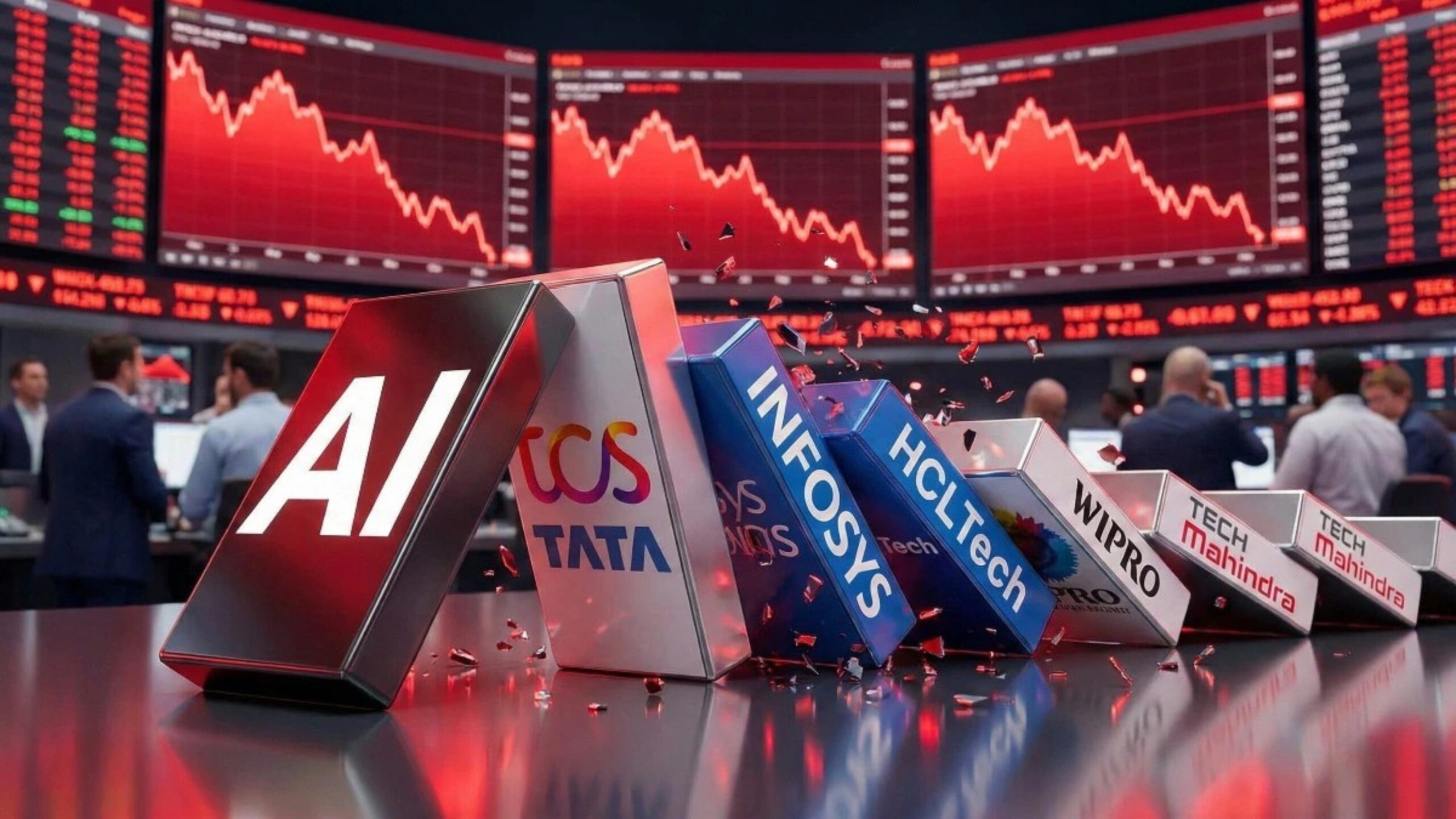
The Indian stock market has been on edge over the past week, and one word is driving the anxiety — Artificial Intelligence. What was once seen as a technological revolution is now raising serious concerns for IT companies and investors alike.
In just one week, the combined market value of India’s top six companies reportedly dropped by more than ₹3 lakh crore. The sudden decline has triggered fears about the future of the IT sector.
How an American AI Startup Sparked the Sell-Off
The market reaction followed the launch of new AI tools by US-based startup Anthropic. The company introduced advanced AI agents capable of performing tasks such as data entry, contract analysis, and outsourcing work within seconds.
These are tasks that traditionally require thousands of employees in IT and outsourcing firms. As a result, investors began worrying that automation could reduce demand for large-scale human workforce models, which many Indian IT firms rely on.
IT Giants Take a Major Hit
The impact was immediate and sharp. Shares of Tata Consultancy Services (TCS) saw a massive erosion in market value, reportedly losing over ₹70,000 crore. Infosys followed with a decline of nearly ₹54,000 crore.
Companies like HCL Technologies and Wipro also faced heavy losses running into thousands of crores.
The broader NIFTY IT index fell by around 8.3 per cent during the week. Even global giants such as Accenture and Cognizant reportedly saw their stock prices drop by nearly 10 per cent.
The ripple effect extended beyond IT. Major companies like Reliance Industries and HDFC Bank also experienced a decline in market value.
Investors Shift Focus to Safer Bets
While much of the market appeared in the red, some stocks managed to stay positive. State Bank of India (SBI) and ITC Limited ended the week with gains.
This trend suggests that investors may be rotating their money from IT stocks into other sectors such as banking and FMCG.
What Lies Ahead for Indian IT?
Market volatility during major technological shifts is not new. Every big innovation brings uncertainty before stability returns. The key question now is how Indian IT companies will adapt to the fast-growing AI ecosystem.
Will they integrate AI into their services?
Will they redesign their business models?
Or will automation reduce their workforce-dependent structure?
The answers to these questions will shape the future of India’s IT industry. For now, the AI wave has clearly reminded investors that technological change can create both opportunity and disruption at the same time.
For the latest updates, click here.