“If the Andhra government wants us (Germany) to see how we can, you know, skill labour here for Andhra Pradesh, I think we would certainly be open for suggestions and ready to sit down with them.”
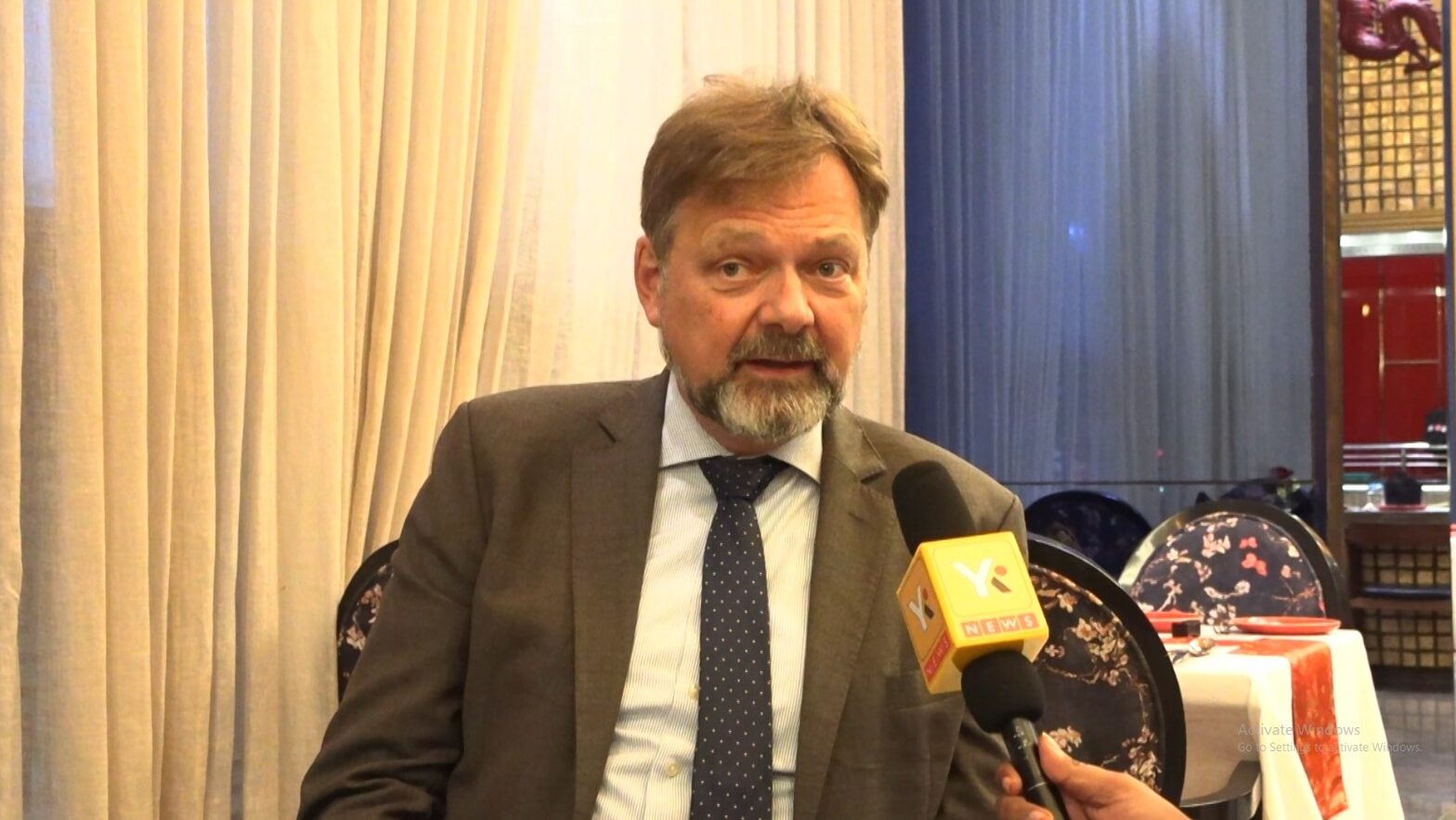
German Ambassador to India Dr Philipp Ackermann, on his first visit to Andhra Pradesh, spoke to YK TV about Germany’s interest in partnering with the State government in areas such as skill development, sustainable farming, higher education, and technology. The envoy shared his admiration for Andhra’s progress, its talent pool, and the possibilities of Indo-German collaboration.
‘Andhra Pradesh is one of India’s powerhouses’
Q: How are your first impressions of Andhra Pradesh, Mr Ambassador?
A: My first thoughts are, first of all, I’m very happy to be here. I didn’t know Andhra so far — I knew about it, but I hadn’t visited before. My first impressions are very, very nice. It’s a beautiful landscape — green, full of agriculture. The drive to Amaravati was picturesque; the barrage, the river — it’s all very beautiful.
But beyond that, after speaking to the Chief Minister, I was impressed by the progress the state has made in the past few years. Andhra Pradesh is now one of the powerhouses of India. I truly admire the energy and dynamism here. It’s a state worth watching closely.
‘We’re already active in Andhra, especially in natural farming’
Q: You said Andhra Pradesh is one of the powerhouses of India, much like Germany is for Europe. Beyond nursing and STEM, are we looking at more collaborations between the German and Andhra governments in skilling and education?
A: The German government is already active in Andhra Pradesh — mainly in the natural farming sector. We are supporting the move toward using fewer artificial fertilizers and pesticides while helping farmers achieve better yields and higher income.
When it comes to skilled labor, we’re currently training caregivers and nurses for employment in Germany, and that has been successful. However, if the Andhra Pradesh government wants us to explore skilling initiatives for local industry and employment, we are certainly open to suggestions and ready to sit down with them.
‘German businesses could play a role in Amaravati’s sustainable growth’
Q: Will German technology contribute to Amaravati’s sustainable capital development?
A: I’m not aware of any ongoing projects right now. But if the Andhra government reaches out to German businesses to explore sustainable development, I’m confident German companies would be keen to collaborate. There’s strong potential here — Andhra has what it takes to attract serious international investment.
‘We need more German teachers in India’
Q: Given the talent pool in Andhra, will we see German language or incubation centers in cities like Vijayawada and Visakhapatnam?
A: The challenge is that we simply don’t have enough German language teachers in India. Many Indians learn German not to teach it here but to go to Germany. So we need to increase the number of teachers by working with universities and language centers.
Visakhapatnam, with its large population and growing academic base, would be a natural fit for a German language or training center. We already have such centers in Hyderabad and Coimbatore — expanding to Andhra is certainly not off the table.
‘Academic collaboration is growing — over 400 partnerships already’
Q: How is the German Embassy enhancing academic ties with Indian universities?
A: There are around 400 university partnerships between German and Indian institutions, as well as growing collaborations in research and innovation. The number of projects and exchanges is increasing every year, reflecting a shared commitment to high-end research and technology cooperation.
‘Andhra nurses are among the most promising talent we’ve seen’
Q: Germany faces a shortage of skilled workers in sectors like healthcare, IT, and engineering. How can Andhra’s talent help?
A: This morning, I met a group of young nurses from Andhra Pradesh who are about to leave for German hospitals. A few hundred nurses have already completed this training and are now working in Germany.
Their proficiency in German and their courage to start a new life abroad deeply impressed me. Andhra’s youth are talented, motivated, and globally competitive — a valuable asset for both India and Germany.
‘German investment aligns with India’s Make in India vision’
Q: How do German investments in renewable energy and smart infrastructure align with India’s Make in India and Atmanirbhar Bharat initiatives?
A: Several German firms are already contributing to India’s manufacturing and renewable energy sectors. For instance, Siemens Gamesa operates a major facility in Andhra Pradesh producing blades for wind turbines. This reflects how deeply German companies believe in India’s potential and are committed to local production and sourcing.
There’s strong Indo-German cooperation across renewable energy, automation, and sustainable manufacturing — areas that align perfectly with India’s long-term vision for growth and self-reliance.
A partnership of potential
From natural farming and nurse training to academic exchange and clean energy, the German Ambassador’s visit highlights a deepening partnership between Andhra Pradesh and Germany — one built on shared innovation, education, and sustainability. As Dr. Ackermann put it, “If Andhra wants to skill its people, we’re ready to sit down with them.”