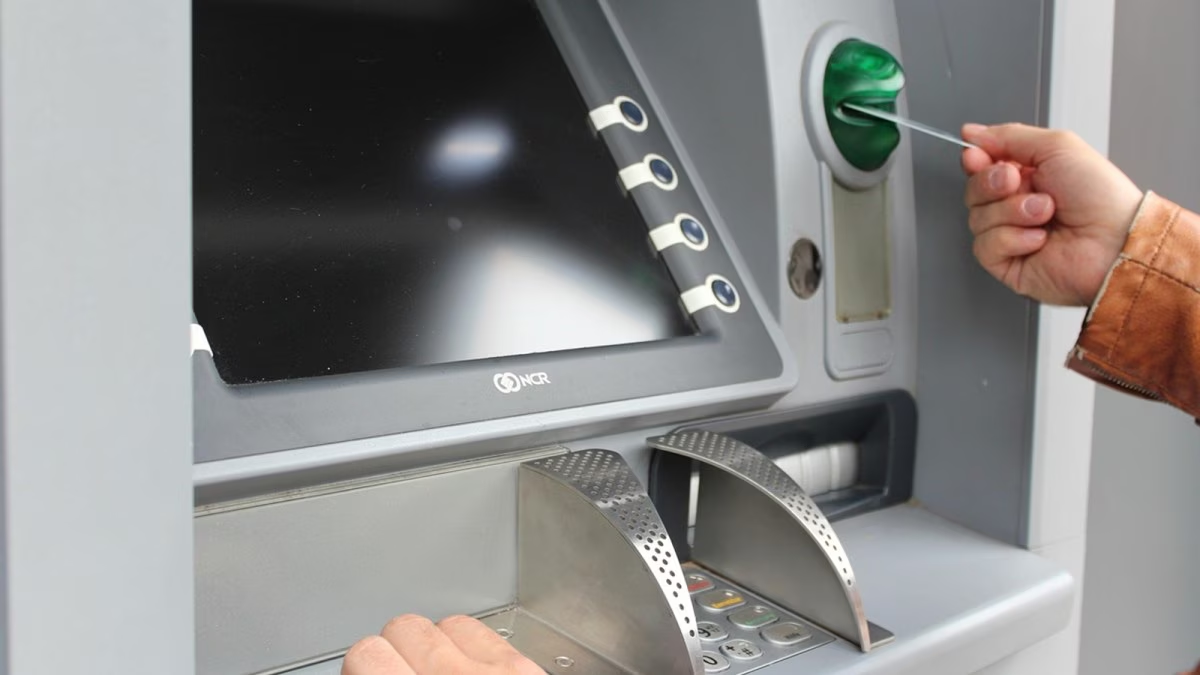
The number of ATMs in India has dropped significantly, mainly due to the rapid rise in digital payments. According to the latest “Trend and Progress of Banking” report released by the Reserve Bank of India (RBI), banks reduced their ATM networks during the financial year 2025 as customers increasingly preferred online transactions.
In addition, rising operational and maintenance costs pushed banks to shut down several ATMs, especially off-site units.
RBI Data Shows Clear Decline in ATMs
As per the RBI report, the total number of ATMs fell from 2,53,417 in March 2024 to 2,51,057 by March 31, 2025. This decline highlights a clear shift in banking behaviour across the country.
Notably, private sector banks recorded the highest reduction. Their ATM count dropped from 79,884 to 77,117 within a year. Meanwhile, public sector banks also saw a marginal fall, with numbers decreasing from 1,34,694 to 1,33,544.
Officials say the closure of off-site ATMs played a major role in this reduction.
White Label ATMs See Growth
Interestingly, white label ATMs, which are operated by non-banking entities, showed growth during the same period. Their numbers increased from 34,602 to 36,216, indicating demand in areas where traditional bank ATMs are limited.
While public sector banks continue to maintain ATM presence in both rural and urban regions, private banks remain largely concentrated in metro cities.
Bank Branches Increase Despite ATM Cuts
Despite the fall in ATM numbers, the number of bank branches has increased. By March 2025, branches grew by 2.8% to reach 1.64 lakh nationwide.
The RBI report noted that public sector banks are leading this expansion. In contrast, private banks have shown slower growth in opening new branches.
Digital Payments Drive the Shift
Experts believe that the growing use of UPI, mobile banking, and digital wallets has reduced the need for physical cash withdrawals. As a result, banks are reshaping their infrastructure to align with changing customer habits.
Overall, the RBI data reflects India’s steady move toward a digital-first banking system.
For more latest updates, click here.