
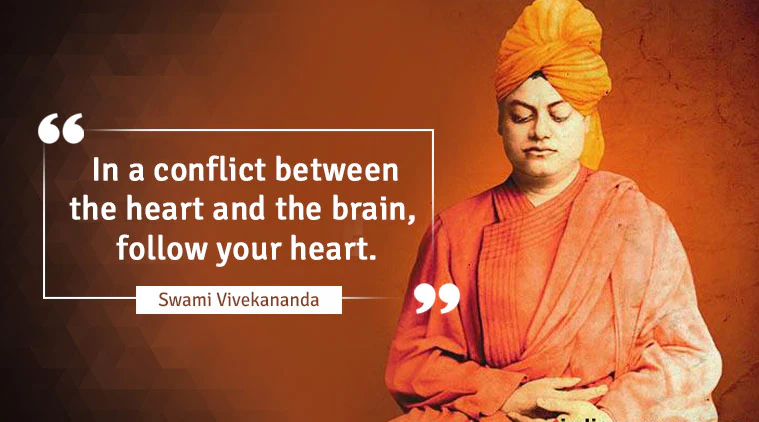
Every year on January 12, the nation remembers Swami Vivekananda Jayanthi, celebrated as National Youth Day across India. Schools, colleges, and institutions organize lectures, events, and photo exhibitions. However, an important question remains unanswered: Are we limiting Vivekananda’s message to ceremonies, or are we truly living his ideas in the lives of today’s youth?
Swami Vivekananda strongly believed that India’s future lies in the hands of its youth. He never viewed young people as mere job seekers. Instead, he envisioned them as confident, courageous, and socially responsible citizens. In today’s competitive world, his emphasis on personality development alongside education has become more relevant than ever.
Service as the Foundation of Social Change
Service occupied a central place in Swami Vivekananda’s teachings. He identified poverty, ignorance, and inequality as India’s real enemies. According to him, service to the poor is service to God. He believed that true national transformation is possible only when the youth develop a strong spirit of service, working alongside government initiatives.
Vivekananda dreamed of an equal and inclusive society. He warned that caste, religious, and class divisions weaken the nation. Based on Vedanta philosophy, he promoted the idea that divinity exists in every human being. Even today, when discrimination and inequality persist in society, his thoughts offer powerful solutions.
Religious Harmony and Women Empowerment
Swami Vivekananda emerged as a global voice for religious harmony. His historic speech at the World Parliament of Religions in Chicago in 1893 remains relevant even now. He declared that the ultimate goal of all religions is humanity, not division. At a time when religious conflicts are increasing worldwide, his message serves as a guiding light for the youth.
He also strongly advocated women’s empowerment. Vivekananda clearly stated that a society that does not respect women cannot progress. He believed that women’s education, freedom, and self-reliance are essential for national development. His views challenge outdated mindsets that continue to restrict women’s growth.
Vedanta, Self-Confidence, and Youth Challenges
The foundation of Vivekananda’s philosophy lies in Advaita Vedanta, which teaches that the soul is one and universal. He inspired people to recognize the immense inner strength hidden within themselves. According to him, self-confidence is the key to both personal and social development.
Today’s youth face serious challenges such as unemployment, intense competition, and mental stress. Many view education only as a path to employment, ignoring life values and social responsibility. This mindset has led some young people toward bad habits, depression, and even suicide, threatening both individual futures and the nation’s progress.
In this context, Vivekananda’s message — choose a goal, move forward with discipline and commitment — acts as a guiding force. Parents and teachers also carry responsibility to understand the interests of youth, encourage them, and guide them toward meaningful paths.
Applying Vivekananda’s Ideas in the Modern World
Inspired by Vivekananda’s words “God is within you”, many young Indians are now learning skills, launching startups, and contributing to innovation. Youth are exploring fields like artificial intelligence, renewable energy, and space technology. Others are engaging in NGOs that promote digital literacy, healthcare, and rural development.
Organizations such as the Ramakrishna Mission continue to lead youth-centric service activities. Practices like meditation, discipline, and digital detox help strengthen mental health in an increasingly stressful world.
Recent surveys indicate that 65% of Indian youth aged 18–25 say they follow Vivekananda’s principles of courage, confidence, and service in their daily lives. Even in corporate environments and startup culture, his message of “move forward without fear” continues to inspire.
Youth Power and India’s Vision for 2047
If today’s youth follow Vivekananda’s teachings, India can achieve the goal of becoming a developed nation. By 2047, youth contributions could help build a $30 trillion economy. Clean energy, technological innovation, social justice, and global leadership are possible only with strong youth participation.
Government initiatives like ‘Developed Youth India’ aim to support this vision. However, Swami Vivekananda Jayanthi must go beyond ritual celebrations. The true meaning of National Youth Day lies in implementing his ideas in daily life, not limiting them to posters and speeches.
A Call to Action for India’s Youth
Service, equality, religious harmony, respect for women, and personality development — these values form the true call Swami Vivekananda gave to the youth. His powerful words still echo today:
“Think boldly, speak boldly, act boldly. Make an idea the goal of your life.”
Only when young Indians respond to this call can the nation become strong, self-reliant, and globally respected. If youth move forward with Vivekananda’s teachings, India can truly become the teacher of the world.
Slogans Inspired by Swami Vivekananda
Think boldly, act fearlessly, and serve selflessly.
Youth with confidence build nations with character.
True education awakens the strength within.
Service to humanity is the highest form of worship.
Swami Vivekananda’s message reminds us that when youth move forward with courage, discipline, and service, India can truly become the teacher of the world.
For more latest updates, click here.