
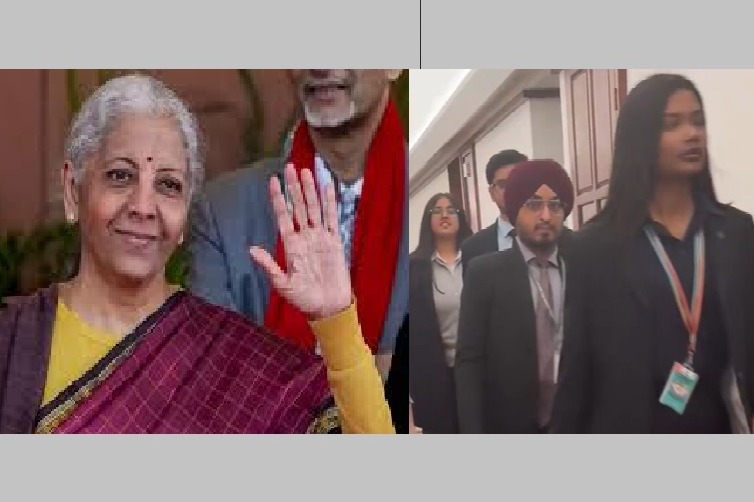
The Union Government created a rare learning experience by inviting 30 college students from across India to witness the Union Budget presentation directly from the Lok Sabha gallery in New Delhi. Finance Minister Nirmala Sitharaman presented the budget in Parliament as students closely observed the live proceedings, marking a strong step toward transparency and youth engagement.
Students Observe Budget Proceedings Live
First, the selected students watched the budget speech from the visitors’ gallery inside the Lok Sabha. They followed key announcements, financial priorities, and policy goals as the Finance Minister addressed Parliament. For many students, this marked their first experience inside the House, making the moment both educational and memorable.
Moreover, the live setting helped students understand how national economic decisions take shape. Instead of learning from textbooks, they saw democracy in action. As a result, the initiative turned a formal budget session into a practical classroom.
Visit to the Finance Ministry at Kartavya Bhavan
After the Parliament session, the students visited the Ministry of Finance at Kartavya Bhavan. There, officials explained how the Union Budget is prepared. They described coordination between departments, data analysis, and long-term planning.
In addition, students learned how policies move from proposals to execution. Officers discussed taxation, expenditure control, and financial discipline. This interaction helped students connect economic theory with real governance.
Direct Interaction With Nirmala Sitharaman
Importantly, the program includes a scheduled interaction with Finance Minister Nirmala Sitharaman. During this session, students will share their views, ask questions, and offer suggestions on budget priorities.
This dialogue reflects the government’s effort to listen to young voices. At the same time, it encourages students to think critically about economic policy and national development.
Encouraging Youth Participation in Governance
Overall, the initiative aims to improve financial literacy and civic awareness among the youth. By opening Parliament and ministries to students, the government strengthens trust and participation.
Furthermore, such exposure inspires interest in public service, economics, and policymaking. Many students described the experience as motivating and eye-opening.
Through this step, the Union Government sends a clear message. India’s future economic vision includes its youth, not just as observers, but as informed participants in nation-building.