City Filled With High-Rise Buildings, but Lacking Greenery
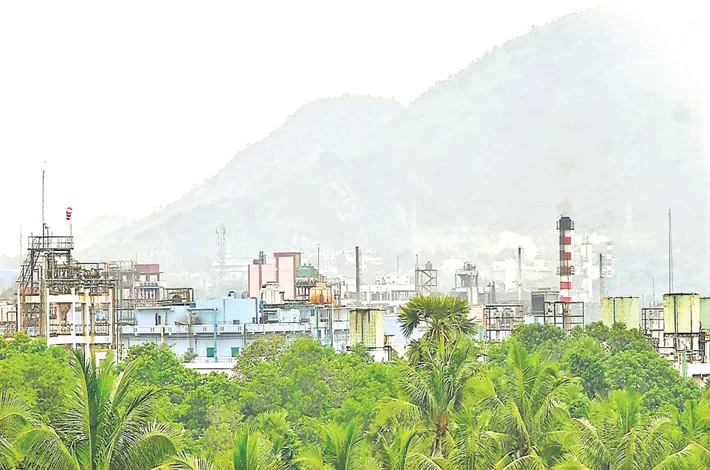
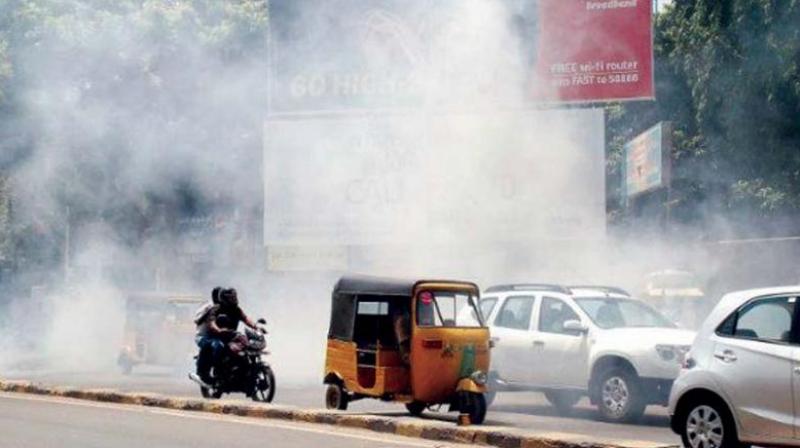
Vijayawada’s skyline is expanding rapidly with high-rise buildings in every direction. However, finding patches of green has become increasingly rare. Vehicle emissions and industrial smoke continue to pollute the air, pushing the city’s Air Quality Index (AQI) to 157, far above the ideal limit of 100. Experts warn that if this trend continues, residents may struggle for clean air within the next few years.
How Development Turned the City Into a Concrete Jungle
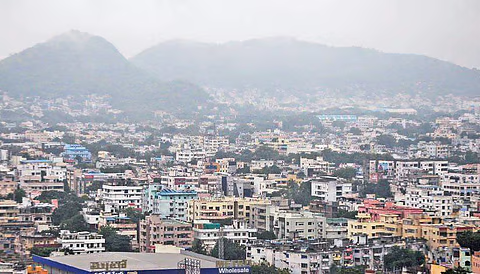
In 2012, Vijayawada reportedly had 1.38 lakh trees. Yet many of them were cut down in the name of development, turning the city into a concrete jungle. Although the TDP government launched a plantation project, the plan was abandoned after the administration changed.
High Population Density, Low Green Cover
Among densely populated cities, Vijayawada stands in third place. Nearly 31,000 people live in every square kilometer, but the city of 15 lakh residents has only about 1 lakh trees. As a result, summer temperatures often shoot up to 40–45°C, and the lack of shade intensifies the heat even more. Dry air, falling oxygen levels, and rising pollution have become the new norm.
A Look Back: When Vijayawada Was Greener
In 1987, then Mayor Jandhyala Shankar famously dropped seeds across the region from a helicopter. That experiment enhanced greenery and improved the city’s environment. Today, the municipal corporation still plans to plant 20,000 to 50,000 saplings every year, but officials admit that government efforts alone are not enough.

A Call for Public Participation
Authorities emphasize that meaningful change requires public involvement. If residents do not plant trees, the climate will worsen further. Heat will continue to rise, oxygen levels will decline, and pollution will become more severe. Only when every individual commits to planting at least one tree can Vijayawada’s environmental balance be restored.